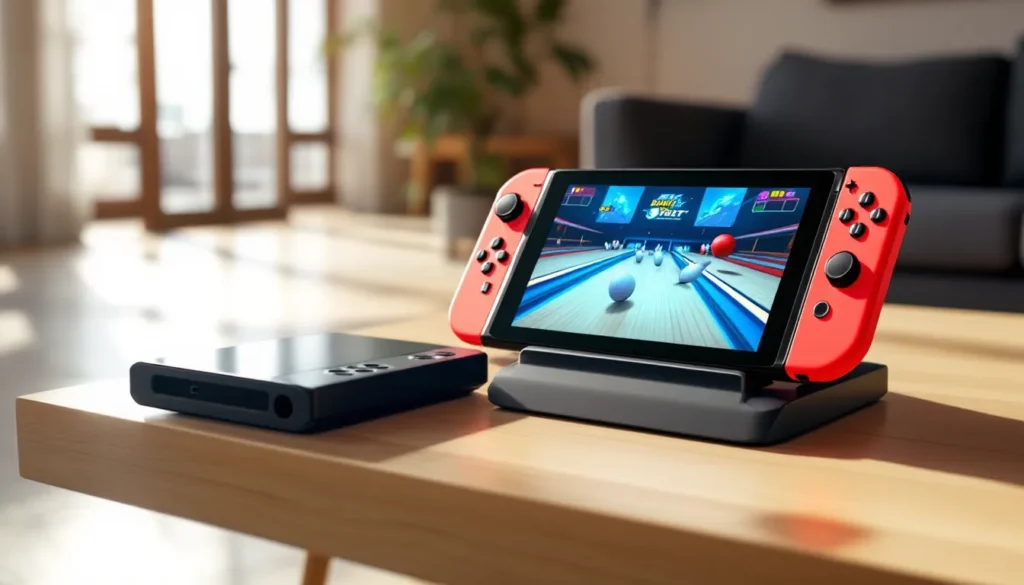
Bowling on the Nintendo Switch has quietly become one of the console’s most accessible and surprisingly engaging experiences. Whether you’re casually rolling a few frames with friends or diving into competitive online matches, bowling games offer something unique: instant gratification without needing to master complex button combos or frame-perfect timing. The appeal is straightforward, pick up a controller, mimic a real bowling motion, and watch the pins fly. But beneath that simple premise lies a surprising amount of depth, from spin mechanics and lane positioning to online tournaments that attract serious players. If you’ve ever wondered what bowling games are worth your time on Switch, how to actually improve your game, or which title fits your playstyle, this guide covers everything you need to know in 2026.
Key Takeaways
- Nintendo Switch bowling games deliver accessible, skill-rewarding gameplay that welcomes casual players and competitive enthusiasts alike, with motion controls providing intuitive, satisfying ball delivery.
- Nintendo Switch Sports is the top choice for most players, offering polished graphics, responsive mechanics, ranked online play, and excellent local multiplayer, while PBA Pro Bowling caters to serious bowlers seeking deeper simulation and realistic lane conditions.
- Master hook techniques and lane-reading strategies to elevate your game—curved shots require precise wrist rotation, and adapting to changing oil patterns throughout sessions separates average players from high-scoring competitors.
- Bowling on the Switch excels as a social experience, whether playing local multiplayer with friends or competing in online tournaments, with less toxicity and more friendly competition than many other online genres.
- Motion controls on modern Switch bowling titles have significantly improved since launch, delivering responsive arm-angle detection and spin mechanics that accurately translate your physical movements into on-screen results.
Why Bowling Games Are Still Popular on Nintendo Switch
Bowling games have endured on Nintendo Switch because they solve a fundamental problem in modern gaming: the skill ceiling doesn’t gatekeep casual fun. You don’t need 500 hours of practice to enjoy a few frames with family. That accessibility is critical. The Switch itself is built around pick-up-and-play multiplayer, and bowling fits that philosophy perfectly. Motion controls make the physical act of bowling feel intuitive, you actually swing the controller, not input a complex sequence. It’s why Wii Sports Bowling became a cultural phenomenon, and why that legacy persists.
Beyond accessibility, bowling games offer something the industry often overlooks: genuine social engagement without toxicity. Unlike competitive shooters or MOBAs where chat gets ugly, bowling tournaments maintain a friendly vibe. You’re competing with people, not against them in a way that breeds conflict. The competitive players appreciate tight mechanics and online leaderboards. The casual crowd loves playing at home or on a couch with friends. Both groups happily coexist in most bowling titles.
Another factor is hardware evolution. The Switch’s motion controllers have improved since launch, and developers have refined motion detection algorithms. Bowling games from 2024-2026 are far more responsive than early Switch titles. Players trust that their movements translate accurately, which is non-negotiable for a sports simulation. Finally, Nintendo’s backing of bowling content, especially through Switch Sports, signals that the company sees sustained demand. Bowling remains evergreen in a way that trend-chasing genres can’t match.
Best Bowling Games Available for Nintendo Switch
Nintendo Switch Sports Bowling
Nintendo Switch Sports (2022) is the modern standard-bearer for bowling on the platform. This is Nintendo’s official answer to Wii Sports, rebuilt from scratch for current hardware. Bowling is one of six sports included (the full package also covers tennis, badminton, volleyball, soccer, and chambara). The motion controls are snappy and responsive, the Joy-Con actually detects arm angle, spin intent, and release timing with impressive accuracy. You can play solo against AI opponents, local multiplayer up to four players, or online against ranked opponents worldwide.
The online ranked system uses a skill-based matchmaking algorithm, so you’re not perpetually matched against pros if you’re casual. Cosmetics exist (custom balls, character skins, lane themes), but none are pay-to-win. The gameplay loop is tight: select your ball, adjust your position and angle, perform your motion, watch the results. Visually, it’s clean and bright, not photorealistic, but sharp enough that you can easily read lane conditions. If you’re buying one bowling game for Switch in 2026, this is the safest recommendation.
PBA Pro Bowling
PBA Pro Bowling (developed by Kordal Games, 2021) takes a more simulation-focused approach. If Nintendo Switch Sports is arcade bowling, PBA Pro Bowling is the serious competitor’s choice. The game includes licensed PBA (Professional Bowlers Association) professionals and real PBA lanes from tournaments. Mechanics are deeper: lane conditions matter significantly, oil patterns affect ball behavior realistically, and spares require actual strategic thinking, not just raw power.
Motion controls are tighter here than in Switch Sports, developers tuned them specifically for bowling purists. Button controls also exist if motion isn’t your preference (useful for dock play). Graphics are more detailed and simulation-focused, though less polished than Nintendo’s official title. Online play exists but lacks the ranked infrastructure of Switch Sports: it’s more casual lobby-based. If you’re into real bowling or want authentic PBA tournaments on your Switch, PBA Pro Bowling delivers. It’s niche, but it’s excellent for its audience.
Wii Sports Resort Bowling (Via Backwards Compatibility)
The original Wii Sports Resort (2009) remains playable on Switch via backwards compatibility with select Wii titles, though this is becoming rarer and requires owning the Wii version separately. The novelty value is high, this game literally defined motion-controlled bowling for a generation. Mechanics feel dated now, and motion detection is less precise than modern Switch titles. But, nostalgia is real, and some longtime players still prefer its feel.
Unfortunately, accessing this is impractical for new players. Nintendo hasn’t released an official Switch port, and finding legitimate copies is increasingly difficult. If you happen to own the Wii version, it’s a fun throwback. For everyone else, skip this and play Switch Sports or PBA Pro Bowling instead. The jump in technology and responsiveness is massive.
Other Notable Bowling Titles
Several lesser-known bowling games exist on the eShop. King Pins Bowling is a budget option with basic mechanics and arcade vibes, fine for pure casual play but lacking online features. Bowling Central offers stripped-down mobile-style bowling: it’s cheap but feels thin compared to Switch Sports. Sports Party bundles bowling with other mini-games, useful if you want variety but diluting quality per sport.
None of these alternatives match the depth or online community of Switch Sports or the simulation authenticity of PBA Pro Bowling. They’re bargain picks if your budget is under $10, but the premium titles are worth the investment.
Essential Controls and Mechanics for Bowling Games
Motion Controls vs. Button Controls
Most Switch bowling games default to motion controls, but they aren’t mandatory. The choice between motion and traditional buttons defines your entire experience, so understanding each is critical.
Motion controls are the intended way to play. You hold a Joy-Con (or both if playing multiplayer with split controllers), and your arm movement dictates the ball’s path. The actual mechanics vary by game: some detect the arc of your swing, others measure arm angle at release, and advanced titles read wrist rotation for spin. Nintendo Switch Sports is accessible with motion but rewards precision, a smooth, controlled swing outperforms wild flailing. PBA Pro Bowling’s motion detection is even stricter: sloppy form gets punished with inconsistent results. Motion controls require space (at least 2-3 feet of clearance), but they’re intuitive once you find your rhythm. Most players report that motion feels “right” for bowling: your brain maps real-world bowling onto controller motion instantly.
Button controls use traditional analog sticks and buttons. You manually input your position (left stick), angle (right stick), and power (held button). Some players prefer this for precision, especially in docked mode. But, button controls feel divorced from bowling’s physicality. You’re navigating a menu with extra steps. PBA Pro Bowling supports buttons decently. Switch Sports’ button implementation exists but feels like a compromise. For competitive online play, you’ll see mixed preferences, motion-dominant players might slight button users, but skill matters more than input method at high ranks.
Recommendation: Start with motion controls. They’re more fun and lower the barrier to entry. If you play exclusively docked or have mobility concerns, buttons work, but understand you’re trading physicality for ergonomics.
Perfecting Your Aim and Approach
Aiming in bowling games involves positioning and angle. Before you even swing, you need to be in the right spot on the approach (the area where you start your delivery). Most games let you adjust your lateral position, moving left or right along the approach. This is your first strategic decision: far left? dead center? far right? The lane width is your playground.
Angle refers to where you’re targeting on the lanes. In Switch Sports, an on-screen guide helps beginners. Advanced players hide this guide and rely on experience. The angle you choose depends on your target pins and the lane’s oil pattern (more on that later). A straight-on approach at the 1-3 pocket (the gap between the 1-pin and 3-pin) is basics. But angles get deeper when you’re throwing hooks (curved balls).
Execution is where motion control shines. Your approach position is set: now you swing. Smooth is the operative word. Jerky motions produce inaccurate results. Full extension matters, a complete follow-through (arm fully extended past your body) signals a clean release. If you chicken out halfway through your swing, the game registers it as weak power. Practice in single-player against AI first. Aim for the 1-3 pocket repeatedly until it’s muscle memory. Then experiment with angle variations.
Pro Tips to Improve Your Bowling Game
Master Ball Spin and Hook Techniques
Straight shots are baseline. Hooks are where skill separates casual and competitive players. A hook is a curved trajectory, the ball travels straight initially, then curves toward the pins in the final phase. In real bowling, this is achieved by throwing a reactive resin ball with revolutions (spin). On Switch, it’s motion-based.
To throw a hook in Switch Sports, you need to understand the input. As you release the ball (end of your swing), rotate your wrist. Clockwise rotation (for right-handed players) creates a right-ward hook: counter-clockwise creates a left-ward hook. The amount of rotation determines hook severity. Subtle rotation = gentle curve. Aggressive rotation = dramatic hook. Timing matters: rotating too early or too late weakens the effect.
Why hook? Because straight shots fail against certain pin setups, especially spares. If you leave the 10-pin (far right), a straight shot from center approach won’t reach it. A hook curves in and takes it out. PBA Pro Bowling’s hook mechanics are stricter, the game rewards real hook form over arcade waggling. Your release point, arm angle, and wrist snap all factor in. This is why serious players spend hours perfecting hook consistency.
Practice routine: Throw 10 straight shots. Then throw 10 hooks with varying intensity. Feel the difference between no rotation, light rotation, and heavy rotation. Gradually integrate hooks into your regular gameplay. You’ll initially overthink it: that’s normal. After 50+ throws, it becomes automatic.
Positioning and Angle Strategy
Professional bowlers don’t just randomize approach positions. They use a strategic system called “boards.” The lane has 39 boards (imaginary vertical lines). Your position and target angle determine which boards your ball travels across. Competitive players memorize which board combinations yield strikes on specific lane conditions.
For casual play, here’s the simplified version: if the lane plays neutral (no heavy oil patterns), center-to-slightly-right approach with a target angle of 1-3 pocket is default. If the lane’s right side is oily and slow, move left and angle more sharply right to use the drier left side. If it’s left-heavy, do the opposite. This is lane reading (covered next), but positioning is your reaction.
In PBA Pro Bowling, lane conditions are explicitly shown. Oil patterns are visible overlays. Lighter colors are dry: darker colors are oily. Adjust your position accordingly. In Switch Sports, it’s more intuitive, throw a few frames, see where strikes happen, adjust. If your first shot strikes, remember that position and angle for spare attempts.
Angle strategy also involves spare conversion. After your first ball (your strike attempt), if you leave pins standing, your second shot is a spare attempt. This requires mental math: which pins remain, which approach and angle will hit them, how much power? The beauty is that spares reward precision over power. A weak, perfectly angled ball beats a powerful, poorly aimed one.
Reading the Lane and Adapting Your Play
This is the advanced skill that separates high-level players from the rest. In real bowling, oil patterns dictate everything. Lanes are laid with a specific oil pattern before a session. Heavy oil on the sides, dry on the boards. As bowlers play, they move the oil, changing the pattern throughout the session.
PBA Pro Bowling includes realistic oil pattern overlays. Darker areas are oily: lighter areas are dry. Your ball skids through oily sections without gripping (minimal hook) and grips hard on dry boards (strong hook). If you throw your first ball and it curves hard toward the dry area, you know that zone has less oil than expected. Adjust your angle on the next frame.
Switch Sports is more arcade, so oil patterns are implied rather than shown. But they still exist. Throw your first ball, observe the result, and adapt. If you threw center with a gentle hook and the ball jerked hard left, the lanes favor hooks today, maybe increase your curl or try the right side. If your hook barely curved, oil’s heavy: reduce rotation.
Lane transition is also critical. Early frames and later frames play differently. Early on, the lane is fresh. Pins scatter predictably. After 10+ frames, oil gets moved, and lanes play dramatically different. Pro players adjust their positions gradually. If frames 1-5 strike from center-right with minimal hook, frames 6-10 might require left approach with heavy hook as oils redistribute. Staying static is how casual players plateau.
Develop this habit: after each frame, ask yourself, “Did that ball behave as expected?” If yes, throw similar next frame. If no, hypothesize why (different oil area, misread the lane, form inconsistency) and adjust. This feedback loop is how you progress from 150-average bowling to 180+ average.
Multiplayer and Social Features in Bowling Games
Local Competitive Play and Party Modes
Local multiplayer is bowling’s secret sauce. Invite three friends, hand out Joy-Cons, and you’ve got instant entertainment. Nintendo Switch Sports supports up to four players locally, and the magic is that skill gaps don’t kill fun. A beginner and an expert can play together, and the beginner still enjoys it because the mechanics are intuitive. There’s no mechanical barrier to entry.
Party modes enhance this. Switch Sports includes a “Graffiti” mode (first to hit a target wins), “Ring” mode (throw through hoops), and standard “Bowling” modes. These variations keep local sessions fresh. You’re not playing 20 straight frames of standard bowling: you’re mixing formats, laughing at unlikely wins, and staying engaged. The social aspect, friendly competition, banter, occasional beer, is unmatched by online play. Local tournaments among friend groups often have more passion than anonymous ranked matches.
Setup is frictionless. Everyone grabs a controller, picks a name, selects a character (cosmetic only), and plays. No account linking or online connectivity needed. This is why bowling games thrive at house parties and family gatherings.
PBA Pro Bowling also supports local multiplayer, though the simulation focus means it’s less party-oriented. Players who want accurate bowling simulation often prefer PBA’s local experience because the realism reinforces competition. The trade-off is that casual players might find it intimidating.
Online Tournaments and Leaderboards
Switch Sports’ online infrastructure is substantial. Ranked matches place you in skill-based tiers, and you climb by winning frames against real opponents. The ranking system uses a traditional ELO-like algorithm, beat higher-ranked players, gain more points: lose to lower-ranked, lose more. This keeps matchmaking balanced. You won’t be matched against pro esports bowlers if you’re average: the system prevents smurfing effectively.
Leaderboards are granular. Global leaderboards, regional leaderboards (by country), and friend leaderboards all exist. Seasonal resets happen, preventing eternal “first place” staleness. Top players get recognition, and there’s genuine prestige in climbing high. The competitive community is welcoming, bowling attracts fewer toxic players than other games, and moderation is active.
Tournament features also exist. Nintendo periodically runs official online tournaments with prizes. These are open-bracket events where anyone can register. Winners get in-game cosmetics or exclusive rewards. The tournaments run for specific time windows (weekends typically), and the schedule is published in advance. Top 100 finishers often get recognition.
PBA Pro Bowling’s online is more basic. Lobbies exist for casual play, but ranked infrastructure is missing. It’s a limitation that hurts competitiveness. If you’re serious about online bowling, Switch Sports is the platform. PBA Pro Bowling is better for solo simulation or local play.
One consideration: online play requires an active Nintendo Switch Online subscription (about $20/year for basic, $50 for Expansion Pack). This is a paywall, but it’s reasonable for the infrastructure costs. Most serious gamers already have the subscription anyway.
Comparison: Which Bowling Game Should You Choose?
Casual Players vs. Competitive Enthusiasts
The choice hinges on your commitment level. If you’re bowling casually, maybe once weekly with friends, Nintendo Switch Sports is the answer. It’s polished, has the largest player base, excellent local multiplayer, and welcoming online. You’re not investing serious time, so the streamlined experience suits you. Cosmetic progression is gentle: you can level characters and unlock stuff without grinding. Graphics are pleasant but not demanding. Joy-Cons feel right for the sport. And if you ever want to try competitive ranked play, the infrastructure exists, you can dip in and out without pressure.
If you’re bowling weekly or more and considering online competition, PBA Pro Bowling enters the conversation. You’re serious enough that simulation accuracy matters. You want to learn real PBA bowling mechanics, practice on authentic lanes, and compete among players who also care about form and strategy. The harder learning curve doesn’t scare you: it excites you. The downside is a smaller community and less polished online infrastructure. But the core bowling experience is deeper.
For absolute casual, party at a friend’s house, bowling as one of many activities, don’t overthink it. Switch Sports is fine, and most households will already own it or can download demos. Budget-conscious players might consider King Pins Bowling, but the experience gap is noticeable. Pay the extra $10 for Switch Sports.
Graphics, Gameplay, and Overall Experience
Nintendo Switch Sports prioritizes clarity and responsiveness over photorealism. Lanes are bright and easy to read. Pin physics are snappy, you see immediate feedback on your shots. The art style is friendly and intentionally non-photorealistic, which ages better than dated graphics. Performance is locked 60 FPS in handheld and docked modes, meaning zero lag. The experience is silky smooth. Gameplay-wise, it’s arcade-oriented: fun, accessible, and slightly simplified compared to real bowling. Spares are achievable without advanced spin techniques. Strikes are rewarding. The pacing is brisk.
PBA Pro Bowling goes photorealistic. Lanes have wear patterns, oil is visible, and bowlers are modeled with detail. Graphics are impressive for Switch standards, though not cutting-edge. Gameplay is simulation-focused: ball physics model real reactive resin, lane transitions happen over time, and spares require strategy. The pacing is slower, each frame feels weighty. Performance is solid but occasionally dips in docked mode on older Switch models (original and Lite). Handheld performance is more consistent.
Visually, Switch Sports is more polished overall because Nintendo’s art direction is stronger. PBA Pro Bowling is more detailed but less refined. If you value aesthetics, Switch Sports wins. If you value authenticity, PBA Pro Bowling wins.
Gameplay-wise, Switch Sports is faster (better for parties and quick sessions). PBA Pro Bowling is deeper (better for serious play and learning). Neither is objectively better: they serve different audiences. The right choice depends on whether you prioritize fun accessibility or simulation depth. For most players, Switch Sports is the obvious pick. For bowling enthusiasts who own actual pins or bowl IRL, PBA Pro Bowling is the spiritual home. Finally, players looking to explore beyond bowling should check out the List of Best-Selling Nintendo Switch Video Games to discover other top titles in the library. For competitive players seeking broader Switch content, Can You Stream on Nintendo Switch is worth exploring if you want to broadcast your matches. Also, Discovering Rare Nintendo Switch Games offers insight into hidden titles that might surprise you. For news on recent Nintendo developments, Gematsu covers Japanese game announcements that often include bowling or sports titles. To stay informed about updated strategies and tier lists, Twinfinite regularly publishes game guides and how-tos. And for comprehensive Nintendo news and reviews, Nintendo Life is an excellent resource for discovering what’s new in the Switch ecosystem.
Conclusion
Bowling games on Nintendo Switch have evolved into a surprising depth of options, each serving different players’ needs and commitment levels. Whether you’re playing casually with friends at home or competing seriously online, the technology and software quality have matured dramatically since the Wii era. Nintendo Switch Sports dominates casual and competitive casual play with its accessibility and solid netcode. PBA Pro Bowling serves purists who want simulation realism over arcade fun.
If you’re new to Switch bowling, start with Switch Sports. Master the basics, experiment with hooks, learn lane reading, and gradually build confidence. Once you’re consistent and craving more depth, PBA Pro Bowling is the natural next step. The core skills transfer, and you’ll appreciate how much simulation can add when you’re ready.
The most important takeaway: bowling is social. Play locally with friends, celebrate close wins, laugh at gutter balls, and don’t sweat ranks. The competitive infrastructure exists if you want it, but the magic of bowling, on Switch or otherwise, is shared fun. With 2026 in full swing, these titles are actively updated and supported, meaning your investment in learning the games now will pay dividends as new seasons, cosmetics, and competitive events roll out.
Grab a controller, find your stance, and roll some frames. The satisfaction of a perfectly executed strike transcends generations and gaming trends.