Finding the right Nintendo Switch games for a 6-year-old can feel overwhelming. There are thousands of titles available, but not all are appropriate for young children, and even fewer actually hold their attention without frustrating them. Parents need games that are genuinely fun to play, visually engaging, and developmentally appropriate. The good news is that the Nintendo Switch has an exceptional library of games specifically designed with young children in mind, ranging from colorful platformers to creative building experiences. This guide walks you through the best Nintendo Switch games for 6-year-olds, breaking down genres, explaining why each title works, and offering practical advice for choosing games that fit your child’s interests and skill level.
Key Takeaways
- Nintendo Switch games for 6-year-olds should prioritize E and E10+ ESRB ratings, with titles like Super Mario Odyssey and Kirby’s Return to Dream Land Deluxe offering intuitive gameplay that teaches skills naturally without heavy tutorials.
- The Nintendo Switch is ideal for young children due to its portability, lightweight Joy-Con controllers, accessible parental controls, and an unusually high percentage of age-appropriate titles in its library.
- Match game selection to your child’s interests and frustration tolerance—observe whether they prefer building (Minecraft, LEGO), exploration (Zelda: Link’s Awakening), or competitive challenge (Mario Kart 8 Deluxe) before purchasing.
- Stick to the American Academy of Pediatrics recommendation of one to two hours of quality screen time daily, use Nintendo’s built-in parental controls to enforce time limits, and watch for signs of unhealthy gaming habits like aggression or withdrawal from other activities.
- Multiplayer games like Snipperclips, New Super Mario Bros. U Deluxe, and Mario Party Superstars strengthen family bonds by encouraging cooperation and shared experiences between parents and children.
- Use free eShop demos and YouTube gameplay videos to test whether a game matches your child’s skills and interests before making a purchase, and prioritize quality titles that cost $20–$30 over expensive editions with unnecessary DLC.
Why Nintendo Switch Is Perfect For Young Children
The Nintendo Switch revolutionized portable gaming when it launched in 2017, and it’s become the gold standard console for families with young kids. Here’s why it works so well for 6-year-olds.
First, the portability is unmatched. Kids can play in the living room, in bed, or on a long car trip without needing a TV setup. The Joy-Con controllers are small and light enough for young hands to manage comfortably, far easier than wrestling with a full-sized Xbox or PlayStation controller. The detachable design also means parents can remove one controller for two-player experiences or use the built-in kickstand for hands-free tabletop mode.
Second, Nintendo has a long history of creating age-appropriate, intuitive games. The company’s design philosophy prioritizes accessibility without dumbing down gameplay. Games teach skills naturally through play, no heavy tutorials needed. Kids jump into Super Mario Odyssey or Mario Kart 8 Deluxe and immediately understand what to do because the mechanics feel instinctive.
Third, the Switch library includes an unusually high percentage of games rated E for Everyone or E10+ (essentially safe for young children). Unlike other platforms where you need to hunt through thousands of titles to find something appropriate, the Nintendo eShop makes it relatively straightforward to find games designed for kids. The parental controls are also robust, allowing you to set play time limits, restrict content by rating, and monitor what’s being played. The Nintendo Switch Online service bundles classic NES and SNES games, many of which are perfect for younger players discovering gaming history.
Finally, the price point is accessible. The standard Nintendo Switch costs less than PlayStation 5 or Xbox Series X, and the Switch Lite ($200 MSRP) offers an even cheaper entry point for families focused on portable play.
Top-Rated Adventure Games For Age 6
Adventure games capture that sense of exploration and discovery that naturally appeals to 6-year-olds. These titles reward curiosity without relying on complex story beats or dialogue-heavy sections.
Colorful Platformers That Build Skills
Super Mario Odyssey is the flagship platformer for young Switch players. The core mechanic, using Cappy (a sentient cap) to possess creatures and objects, sounds complex but plays beautifully. Kids learn movement, timing, and problem-solving through natural progression. The game never feels punishing: falling into a pit just respawns you nearby. Difficulty scales gracefully, so younger children can enjoy the main story while older kids hunt for every moon collectible. It’s the perfect introduction to 3D platforming.
Mario Kart 8 Deluxe deserves mention here even though it’s racing, not pure adventure. The game’s “Smart Steering” and assist options make it genuinely playable for 6-year-olds. Remove the assists as your child improves, and they’re learning racing lines and track strategy. The vibrant tracks, recognizable characters, and satisfying feedback make this instantly appealing.
Kirby’s Return to Dream Land Deluxe (2023) is a masterclass in game design for young players. Kirby’s copy abilities teach cause-and-effect thinking, swallow an enemy, gain its power, solve the puzzle. The game is colorful and cheerful, but mechanically sound. The Mouthful Mode, where Kirby transforms into various objects to solve environmental puzzles, adds creativity and charm. This game respects young intelligence while remaining accessible.
Donkey Kong Country: Tropical Freeze is slightly more challenging than the others listed here, but it’s still manageable for 6-year-olds with patience. The mine cart sections, barrel cannons, and animal buddies (like Diddy Kong) create memorable moments. The visuals are gorgeous, this isn’t a kiddie game in appearance, it’s just appropriate for kids. If your child has beaten Odyssey, Tropical Freeze is the natural next step.
Exploration-Focused Titles
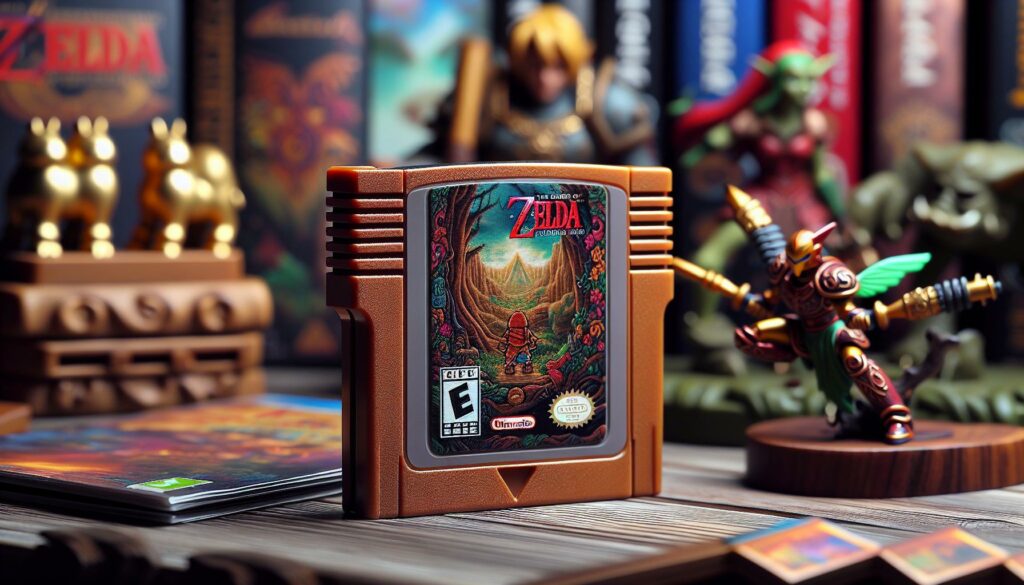
The Legend of Zelda: Link’s Awakening is a charming remake of the 1993 Game Boy classic. The top-down perspective makes navigation intuitive for young players. The puzzles range from simple to moderately tricky, and the game encourages exploration without punishing you for getting lost. The art style, rendered in a toy-like aesthetic, appeals to kids immediately. At roughly 15-20 hours, it’s substantial enough to feel like a complete adventure without overstaying its welcome.
Pikmin 4 offers a different kind of exploration. You command tiny alien creatures to solve puzzles and gather resources. It’s methodical rather than action-heavy, which suits some 6-year-olds better than fast-paced platformers. The charming Pikmin designs and the satisfaction of organizing them make this a meditative, rewarding experience. The game includes a “Pikmin Park” idle mode where your creatures work while you’re away, adding a pet-like attachment.
Animal Crossing: New Horizons might be the most zen entry here. There’s no combat, no time pressure, no failure states. You customize an island, decorate your home, catch fish, collect bugs, and interact with adorable villagers. Some 6-year-olds find this repetitive: others become obsessed. If your child loves creative expression and collecting things, this could occupy them for months. Parents often play alongside their kids, making this genuinely multiplayer in the best way. Many families purchase Nintendo Switch Animal Crossing Bundle Overview specifically because of this game’s popularity.
Educational Games That Feel Like Play
The best educational games never feel like learning. They’re genuinely fun, and the educational component emerges naturally from engaging mechanics.
Puzzle And Brain-Boosting Games
Puyo Puyo Tetris combines two classic puzzle franchises. While Tetris is familiar to most adults, it’s also timeless for kids. Puyo Puyo (match-four gameplay) is slightly more forgiving for young learners. The game runs the difficulty spectrum from “casual” to “completely unhinged,” so kids can play at their comfort level. It’s a portable brain-teaser that teaches spatial reasoning and quick decisions. The “Fusion” mode mixes Tetris and Puyo rules for variety.
Ring Fit Adventure disguises fitness as a game. You slide a Ring-Con controller around your body, performing exercises to attack enemies and solve puzzles. It’s brilliant for combating screen time fatigue. Kids get absorbed in the “game” while actually getting physically active. The difficulty scales, and you can adjust intensity. It’s one of the few Switch games that makes parents genuinely happy because it’s contributing to their child’s physical health.
Snipperclips is a puzzle-adventure where two characters cut each other into different shapes to solve environmental puzzles. It sounds weird: it’s absolutely delightful. The game teaches spatial reasoning and creative problem-solving. More importantly, it’s genuinely funny. Watching a 6-year-old figure out that they need to cut their character into a specific shape and laugh when it works? That’s magic. It’s also excellent co-op, making it perfect for parents playing alongside kids.
Creative And Building Games
LEGO games dominate this category. Titles like LEGO Super Mario and LEGO Harry Potter let kids build and then play through levels. The building aspect appeals to the natural constructor instinct in young children. LEGO games are colorful, non-violent (you defeat enemies by “destroying” them into LEGO bricks), and packed with collectibles that reward exploration. They also support co-op, so parents can participate.
Minecraft is the ultimate creative sandbox. Kids build whatever they imagine, houses, castles, pixel art, elaborate machines. The game has both Survival mode (manage resources, avoid monsters) and Creative mode (unlimited building). For 6-year-olds, Creative mode is usually the sweet spot. Watching your child’s imagination materialize in blocky digital form is remarkable. Many parents find it educational too: kids learn spatial planning, resource management, and perseverance. The multiplayer options mean family gaming nights are possible.
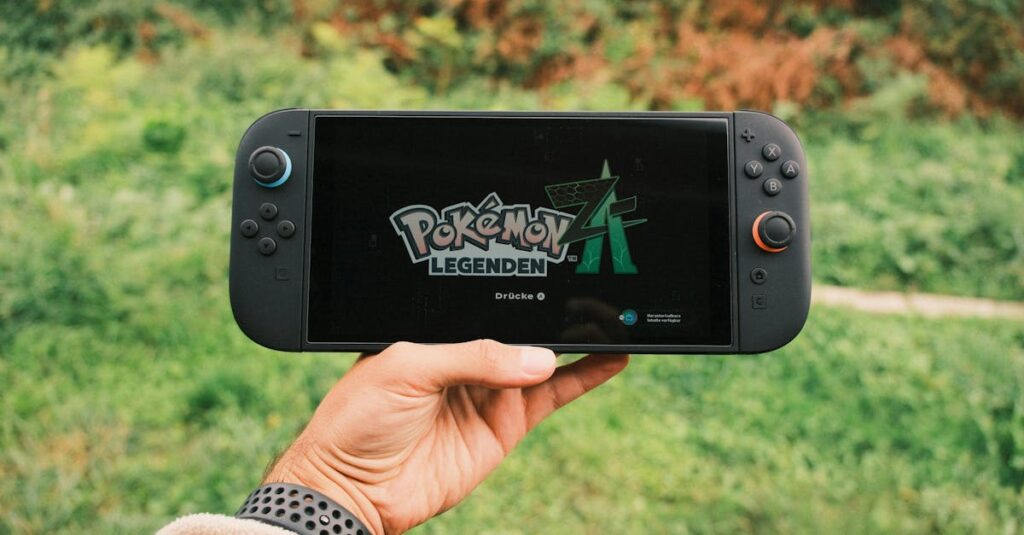
Pokemon Legends: Arceus offers a different angle on creativity. You’re a Pokemon researcher building your first Pokedex, but instead of traditional turn-based combat, you throw balls directly at creatures while they approach. The action is gentler than main Pokemon games, making it more accessible. Young players love the collection aspect, gotta catch ’em all, without the competitive pressure of Sword/Shield.
Sports And Fitness Games For Active Play
Sports games for 6-year-olds should emphasize fun over simulation. Kids don’t care about realistic NFL rosters: they want bright graphics, easy-to-understand objectives, and immediate gratification.
Mario Kart 8 Deluxe was mentioned earlier, but it deserves emphasis here. Smart Steering keeps your child on the track automatically: they just control acceleration and item usage. The tracks are visually distinct, recognizable characters populate the roster, and winning feels amazing. The battle modes (where you throw items at opponents) are pure chaos and joy for this age group. It’s arguably the best multiplayer game for families with mixed gaming skill levels.
Mario Golf: Super Rush captures golf’s appeal without complexity. You press a button for power, adjust aim, and swing. The controls are intuitive, and the game’s personality shines through animations and character interactions. Tournament mode gives kids a goal structure, while Free Play lets them experiment. The graphics are colorful and appealing.
Mario Party Superstars is perfect for group play. It’s a board game where players move spaces based on dice rolls, play mini-games, and battle for stars. The mini-games are bite-sized skill challenges, anything from button-mashing to memory games to reflex tests. Kids don’t need deep strategy understanding: the RNG (random number generation) from dice rolls means anyone can win. It’s as much about family fun and (friendly) competition as pure skill.
Ring Fit Adventure, mentioned in the education section, absolutely belongs here too. It’s the only major fitness game on Switch that genuinely works for kids. The adventure mode has you defeating enemies through exercise, creating a game structure that motivates movement. For parents worried about their child’s activity level, this is a legitimate solution. The game tracks calories and exercise stats, and progression feels rewarding.
Nintendo Switch Sports (the free-to-play launch title that replaced Switch Sports with different games) offers variety. Tennis, golf, bowling, badminton, soccer, and volleyball are all represented. Each sport has simple controls optimized for the Joy-Con motion sensors. Pick-up-and-play design means anyone can jump in. The online multiplayer is accessible, though you can absolutely play locally against other family members.
Multiplayer Games For Family Fun
The best multiplayer games create memories. Whether you’re playing alongside your 6-year-old or they’re playing with a sibling, these titles are designed for group fun without requiring everyone to be equally skilled.
Couch Co-Op Experiences
New Super Mario Bros. U Deluxe is a side-scrolling platformer where up to four players cooperate (or hilariously sabotage each other) to reach the goal. The game’s genius is that skilled players can help younger players by creating platforms or passing items. If a younger player falls behind, they can still contribute and reach the finish. The art style is charming, and each world has a unique theme. It’s long enough to provide real play time but short enough per level that kids stay engaged.
Donkey Kong Country: Tropical Freeze supports two-player co-op, where one player controls DK and another controls Diddy Kong. Players can split up to solve different puzzle elements or work together to overcome obstacles. The game’s personality, vibrant levels, catchy music, charming characters, makes the experience joyful. Younger and older kids can play together, and the assist options make it scalable.
Snipperclips, covered earlier, is exceptional co-op. The game requires genuine teamwork. You can’t complete puzzles alone: you need your partner’s help. This creates organic cooperation and teaches problem-solving together. Parents report that playing Snipperclips with their kids strengthens family bonds, it’s that good at encouraging collaboration.
Kirby’s Return to Dream Land Deluxe includes a co-op mode where two players play through the same levels together. One controls Kirby: the other controls King Dedede. Both can use copy abilities and work toward shared objectives. It’s less puzzle-focused than Snipperclips but more action-oriented, offering different vibes for different play styles.
Party And Mini-Game Collections
Mario Party Superstars was mentioned earlier, but it’s crucial for multiplayer fun. The game supports four players, wild swings of fortune, and mini-games designed for varying skill levels. Parents actually enjoy playing this with their kids, which is rare for children’s games. The replayability is enormous because so much depends on dice rolls and luck.
WarioWare: Move It. is a collection of micro-games (activities lasting just seconds) that use motion controls. You twist Joy-Cons, make unusual poses, or point at the screen. Each mini-game is a rapid-fire challenge that kids find hilarious. The game is genuinely funny, and playing it feels less like “being at work” and more like “having a weird fun time.” It’s perfect for quick play sessions and genuinely inclusive, anyone can win a single micro-game regardless of gaming skill.
Just Dance games (various years available) are motion-based rhythm games. Kids watch dancers on screen and mimic their moves. It’s physical activity disguised as dance. The song selections include current hits and classics, so there’s something for everyone. The game doesn’t judge, you’re “good” as long as you’re moving, making it low-pressure fun. Multiple players can join, creating group entertainment.
Overcooked. 2 is a cooperative cooking game where players manage kitchen stations, prep food, and serve dishes under time pressure. It’s chaotic, funny, and requires genuine teamwork. You can play two-player with one Switch, making it perfect for parent-child duos. The game teaches cooperation and communication. Some players report it testing their patience, but the reward for succeeding together is genuine.
Ninjala is a free-to-play online multiplayer game focused on action and fun rather than competitive grinding. Kids create custom ninja characters and battle it out with gum-based weapons (seriously). The combat is more about flash and fun than deep strategy. Cross-platform play means playing against players on other systems. While it has in-game purchases, they’re cosmetic, you don’t need to pay to enjoy the core experience.
Important Parental Considerations
Smart gaming for young children isn’t just about finding good games, it’s about implementing healthy habits and making informed content choices.
Age Ratings And Content Warnings
The ESRB (Entertainment Software Rating Board) uses these categories:
- E (Everyone): No content parents should be concerned about. Most games in this guide fall here.
- E10+ (Everyone 10 and older): May contain mild violence, crude humor, or light thematic content. Mario games, Kirby games, and most Nintendo franchises sit here.
- T (Teen, 13+): Contains elements unsuitable for young children (more intense violence, language, themes). This is where competitive online games often land.
For 6-year-olds, stick with E and E10+ ratings. The difference between E and E10+ is negligible for healthy development: E10+ might have slightly more action or mild roughhousing but nothing that should concern parents of average sensibility.
Beyond ratings, pay attention to specific content descriptors. A game might be E10+ for “Mild Violence” (which might just mean colorful cartoon impacts) versus T for “Violence” (which could be something else entirely). The ESRB website provides detailed breakdowns for every game.
Also be aware of online multiplayer implications. Games with online play expose your child to other players, who may not be well-behaved. Nintendo’s online systems have reporting tools, but you can’t completely eliminate negative interactions. You might choose multiplayer-focused games only for local play with family and friends, or enable parental restrictions on online communication.
Screen Time And Gaming Habits
The American Academy of Pediatrics recommends limiting screen time for children ages 6 and older to one to two hours of quality programming per day. “Quality” means educational content or content watched with parents, not passive zombie-watching.
Video games are interactive, which is better than passive consumption, but balance matters. A 6-year-old spending six hours a day playing Switch games isn’t healthy regardless of game quality. Set reasonable limits (perhaps one hour on school days, more on weekends) and stick to them. Nintendo’s parental controls let you enforce time limits automatically, which removes the negotiation from “time to stop.”
Encourage outdoor play, physical activity, and social interaction outside gaming. Gaming should be one activity among many, not the default mode. Many parents report that their children are happier when they’ve played outside, done assignments, and had real social interaction before settling down for gaming time.
Watch for signs of unhealthy gaming habits: aggression when asked to stop playing, withdrawal from other activities, sleep disruption, or schoolwork suffering. These indicate it’s time to reassess how much gaming is happening and whether a different mix of activities would serve your child better.
Consider playing alongside your child occasionally. Joint gaming creates shared experiences, builds relationships, and lets you monitor what they’re actually playing and learning. Parents often discover they enjoy games like Mario Odyssey or Mario Kart more than they expected.
How To Choose The Right Game For Your Child
Not every “good” game is right for every child. Individual preferences, skill levels, and interests vary enormously.
Start by observing what naturally interests your child outside gaming. Do they love building things? Look at Minecraft, LEGO games, or creative titles. Do they prefer competitive challenge? Mario Kart and sports games deliver that. Are they drawn to stories and characters? Adventure titles like Zelda and platformers with personality (Kirby, Mario) work better.
Consider your child’s patience level and frustration tolerance. Some 6-year-olds are fine with trial-and-error learning: others need immediate success to stay engaged. Games like Ring Fit and Animal Crossing provide constant positive feedback. Games like Donkey Kong Country might frustrate a child who hasn’t developed patience yet.
Level and genre progression matters. Start with accessible titles like Mario Kart and Super Mario Odyssey. These games teach the basics, controller management, spatial reasoning, objective understanding, without crushing frustration. Once your child is comfortable, branch into more complex experiences.
Listen to your child’s requests, but verify they actually want to play before buying. Kids sometimes see cool things and want them without understanding gameplay. Watch a YouTube gameplay video together before purchasing. Seeing someone else actually play reveals whether the game matches your child’s skills and interests.
Read ESRB descriptions and watch gameplay videos from trusted sources like IGN or GamesRadar+. Don’t rely solely on the rating: understand the specific content. A game might be E10+ but perfect for your 6-year-old, or E10+ and absolutely not appropriate for your specific child’s sensibilities.
Use the eShop demo system. Many games offer free demos, full versions with time limits. Let your child play the demo before committing to a purchase. This removes the guesswork entirely.
Don’t overspend before determining what resonates. Nintendo games rarely go on sale, but third-party games do. Wait to see if your child genuinely loves a game before buying the “complete edition” with all DLC. Some of the best games for this age group cost $20-$30, not $60.
Consider your family’s gaming habits too. If you’re not a gamer yourself, pick games with intuitive controls and forgiving difficulty. If you enjoy gaming, you might pick something you’ll both enjoy playing together. The list of best-selling Nintendo Switch video games includes many titles refined by millions of players, which is a good proxy for accessibility and enjoyment.
Finally, remember that the “best” game is the one your specific child enjoys and learns from. Generic rankings help, but individual personality matters most. A game doesn’t need to be famous or critically acclaimed to be perfect for your family, it just needs to engage your child appropriately.
Conclusion
The Nintendo Switch has proven itself the finest family console for young children, offering an unmatched library of age-appropriate games that are genuinely fun to play. From colorful platformers that teach coordination to creative experiences that stimulate imagination, there’s legitimate depth here beyond typical “kids games.”
Choosing the right game requires understanding your child’s personality, skill level, and interests rather than defaulting to what’s popular. The games highlighted throughout this guide, Super Mario Odyssey, Mario Kart 8 Deluxe, Kirby’s Return to Dream Land Deluxe, Animal Crossing, Minecraft, and the multiplayer titles, represent the strongest starting points for most 6-year-olds.
Implementing healthy habits matters as much as the games themselves. Set reasonable time limits, play alongside your child occasionally, and watch for signs of unhealthy gaming patterns. The goal is gaming as one enriching activity among many, not gaming as the default mode.
The Nintendo Switch community has expanded significantly since launch, with gaming guides and news from major outlets and platforms like Game Rant covering everything from casual family games to competitive esports. Your family isn’t alone in exploring Switch gaming, millions of parents have successfully balanced entertainment, education, and healthy development through thoughtful game selection.
Start with a few highly accessible titles, observe what captivates your child, and build from there. The library is deep, the games are quality, and your 6-year-old’s gaming journey is just beginning. You’ve got this.