Nintendo Switch Online just keeps getting better. While the service has existed for years, the N64 emulation tier has quietly become one of the most underrated draws for subscribers. Whether you’re hunting for nostalgia or discovering these classics for the first time, the N64 game library on Switch offers something most modern consoles can’t: legitimately great games from an era when 3D gaming was still finding its footing. But jumping in without knowing what you’re doing means missing out on hidden gems, struggling with unfamiliar controllers, and not getting the most out of these remastered experiences. This guide walks through everything you need to know about Nintendo Switch Online’s N64 games, the full library, setup, optimization tricks, and what’s actually worth playing in 2026.
Key Takeaways
- Nintendo Switch Online N64 games require the Expansion Pack subscription ($50/year) and feature over 60 titles including essential classics like Ocarina of Time, Super Mario 64, and GoldenEye 007.
- Investing in a dedicated wireless N64 controller or quality third-party alternative ($40-60) dramatically improves gameplay experience compared to standard Joy-Cons or Pro Controllers.
- Must-play N64 games for newcomers include Ocarina of Time for adventure design, Super Mario 64 for 3D platforming innovation, and GoldenEye 007 for console FPS fundamentals.
- Hidden gems like Banjo-Kazooie, Paper Mario, and Star Fox 64 offer gameplay depth and creativity that rival the most famous titles, rewarding players who explore beyond the obvious choices.
- N64 emulation on Switch delivers solid 60 FPS performance with proper controller setup, making these 30-year-old games surprisingly accessible despite dated graphics and different control schemes.
- Local multiplayer remains a core N64 strength, with Mario Kart 64, GoldenEye 007, and Mario Party delivering genuine fun with friends that outweighs their graphical limitations.
What Is Nintendo Switch Online And How Does N64 Emulation Work?
Nintendo Switch Online is a subscription service that gives you access to classic NES, SNES, and N64 games. The N64 tier specifically launched in October 2021 and has been expanding ever since. Unlike just dumping old ROMs onto hardware, Nintendo’s approach uses emulation that translates the original N64 code to run on Switch.
The emulation layer is where things get interesting. Nintendo developed this specifically for Switch, and it’s not a third-party emulator like you’d find if you were emulating N64 elsewhere. The company had to account for the Switch’s different processor architecture, memory setup, and the need to make these games feel native to the console. This means compatibility is solid, the games run stably, load quickly, and maintain the original experience without the janky performance issues older emulation projects sometimes had.
One thing to understand: you’re not buying individual games. You’re paying for access to the entire library as long as you maintain your subscription. The base Nintendo Switch Online plan runs $20 annually (or $50 for Expansion Pack, which includes N64 and Game Boy games). The N64 games are exclusive to the Expansion Pack tier, so casual players might stick with just the basic plan.
The Full N64 Game Library Available Now
The N64 library on Switch has grown significantly. As of early 2026, there are over 60 titles available, with Nintendo consistently adding more. The roster includes nearly everything worth playing from the original console, major releases like The Legend of Zelda: Ocarina of Time, Super Mario 64, and Mario Kart 64, alongside deeper cuts that hardcore collectors still cherish.
Here’s what matters: you won’t find every single N64 game ever made. Licensing issues mean some third-party titles never made it onto the service, and a handful of first-party games have stayed off for various reasons. But what you do get represents the best and most important games from the system.
Classic Platformers And Adventure Games
The platformer lineup is the backbone of N64’s legacy. Super Mario 64 remains the starting point, it redefined 3D platforming when it released in 1996 and still holds up. The Legend of Zelda: Ocarina of Time and its sequel Majora’s Mask are adventure masterpieces that defined a generation. If you’ve never played either, these are non-negotiable.
Beyond the obvious: Banjo-Kazooie and Banjo-Tooie offer similar structure to Mario 64 but with wildly different personality. Donkey Kong 64 is more divisive, it’s longer, grindier, and filled with collectibles, but it’s still a solid platformer if you embrace the pace. Star Fox 64 brings arcade-style action that still feels tight. Kirby 64: The Crystal Shards offers a gentler experience perfect if you want something less demanding.
Sports And Racing Titles
Mario Kart 64 is the big one here. Yes, the controls take adjustment compared to newer Mario Kart games, the drifting feels floatier and less forgiving. But once you dial it in, it’s still fun, especially locally. F-Zero X is there for speed freaks, though it’s decidedly more arcade-oriented than modern racing sims.
For sports fans, you’ve got Mario Tennis, Mario Golf, and Paper Mario (which is as much RPG as sports). WCW/nWo Revenge and WWE No Mercy are wrestling sims with cult followings. NBA Courtside represents early basketball gaming. These aren’t essential unless you’re into retro sports games specifically.
Action And Combat Games
This is where the N64 showed its versatility. GoldenEye 007 is the legendary first-person shooter that basically invented console FPS controls. Even by 2026 standards, playing through the campaign is worthwhile, the mission design is smart, and the controls have aged better than people assume. Perfect Dark, the spiritual sequel, is equally good and arguably deeper mechanically.
The Legend of Zelda: Ocarina of Time and Majora’s Mask also fit here since they blend adventure and combat. Star Wars: Rogue Squadron is an on-rails shooter with tight controls. F-Zero X bridges racing and arcade action. If you want something heavier, Mortal Kombat Trilogy and Mortal Kombat 4 are there, along with Street Fighter representation.
Party And Multiplayer Experiences
N64 defined couch multiplayer. Mario Party 2 and Mario Party 3 are the canonical entries, chaotic, fun, occasionally rage-inducing. Mario Kart 64 shines with friends. GoldenEye 007‘s multiplayer modes (Slappers Only, anyone?) still slap. Perfect Dark has even more content and customization than GoldenEye.
Diddy Kong Racing offers a different flavor than Mario Kart, it has more personality and personality-based item distribution. Kirby 64 is great for couch co-op. Paper Mario has charm that works great if someone’s watching. These are the games where N64’s strengths shine brightest.
Getting Started: Setup And Controller Options
Setting up N64 games on Switch is straightforward, but controller choice makes a massive difference.
Configuring Your Nintendo Switch For N64 Gaming
Once you’ve subscribed to Nintendo Switch Online Expansion Pack, the N64 app appears on your home screen. Opening it shows the full library. Games launch instantly, no installation, no waiting for downloads. That’s the beauty of emulation done right.
Make sure your Switch system is updated to the latest firmware. Nintendo occasionally pushes stability updates for the N64 emulation, and you want those patches. Controller mapping and performance tweaks sometimes come through updates.
One quirk: N64 games run in their original 4:3 aspect ratio on a 16:9 screen. You’ll see pillarboxing (black bars on the sides). This is authentic to the original experience, though some players prefer stretching the image. You can toggle this in the game’s settings, it’s a personal preference, but purists generally stick with the original ratio.
Controller Compatibility And Recommendations
Here’s the critical part: the stock Joy-Con controllers are not ideal for N64 games. The N64’s original controller had a unique layout, the C buttons on the right, the Z trigger, and that weird three-pronged stick. Joy-Cons don’t map perfectly to this.
You have options:
Nintendo’s N64 Controller (Official) – Nintendo released an officially licensed wireless N64 controller that plugs into the Switch’s dock. If you can find one at a reasonable price, it’s the gold standard. The layout is authentic, and it feels genuine. The stick does wear out faster than Joy-Con (N64 sticks always did), but it’s the best feel.
Third-Party N64-Style Controllers – Companies like 8BitDo and PowerA make wireless controllers specifically designed for N64 on Switch. They cost $40-60 and offer solid build quality. Some have modernized stick materials that don’t degrade as fast. They’re less “authentic” but more practical for long sessions.
Joy-Con Mapping – You can use Joy-Cons, but you’ll need to remap buttons. Most players assign C buttons to the right stick’s directional positions and accept some awkwardness. It’s playable but not optimal, especially for games like Ocarina of Time where camera control is crucial.
Pro Controller – The standard Switch Pro Controller works and has better ergonomics than Joy-Cons for extended play, but the button layout still doesn’t match N64 perfectly. It’s a compromise solution.
For first-time players, either grab an official N64 controller or a quality third-party alternative. The money spent on a proper controller pays for itself in comfort and authenticity. You’re not trying to play these games once, you’re settling in for dozens of hours.
Best N64 Games To Play In 2026
Not all N64 games have aged equally. This section cuts through the noise and tells you what’s actually worth your time.
Must-Play Classics For New Players
If you’ve never experienced these, they’re non-optional:
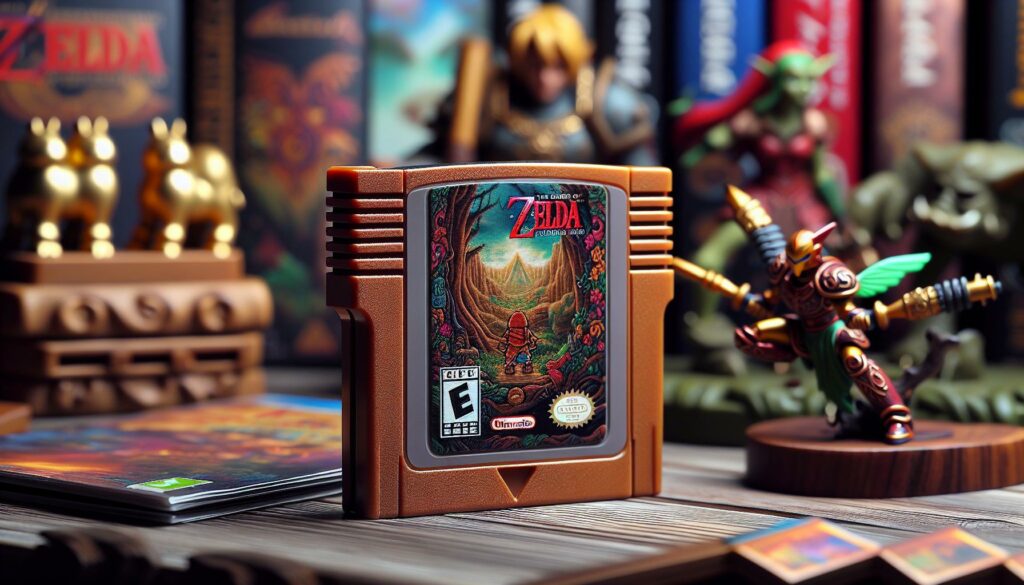
The Legend of Zelda: Ocarina of Time – This game defined dungeon design, puzzle structure, and 3D action-adventure gaming. Playing it in 2026, you’ll recognize DNA in almost every adventure game that followed. The story, the dungeons, the soundtrack, all still hit. Combat feels intentional rather than floaty. This is where to start if you’re new to N64.
Super Mario 64 – Similarly important. It’s the blueprint for 3D platformers. The movement feels responsive even by modern standards. Each world is dense with secrets and alternate routes. If you bounce through this game casually, you’ll miss half the design. Engagement rewarded.
Mario Kart 64 – Skip the graphics comparisons to modern Mario Kart. Approach it as its own thing. The drifting and speed mechanics are satisfying once you dial them in, and the track design is solid. Local multiplayer is where this shines, it’s genuinely fun with friends.
GoldenEye 007 – The campaign is smartly designed with multiple difficulty levels and mission objectives that reward replaying. The multiplayer is chaos in the best way. Controls take 10 minutes to adjust to, then they click. This is essential gaming history.
Hidden Gems Worth Rediscovering
Beyond the obvious names, some games deserve more attention:
Banjo-Kazooie – In the same vein as Mario 64 but with more personality. The writing is sharper, the humor lands, and the world design is inventive. If you only play Mario 64, you’re missing a top-tier platformer.
Paper Mario – This game has aged beautifully. The writing is genuinely funny, the combat system (turn-based with timing) is engaging, and the story actually has emotional beats. It’s lighter than mainline RPGs but substantial enough for 20+ hours.
Star Fox 64 – An on-rails shooter with incredible replay value. The controls are tight, the difficulty scales well, and there are multiple paths through each stage. It’s short but dense. Great for replaying.
F-Zero X – Brutal difficulty, but the track design and speed are intoxicating. Not for everyone, but if you like hardcore racing, this is a gem most people skip.
Kirby 64: The Crystal Shards – Gentler than other N64 games, but the power combination system is genuinely creative. Co-op play is a blast. Great if you want something fun without frustration.
Donkey Kong Country 2: Diddy’s Kong Quest – Wait, isn’t this SNES? It is, but N64 has Donkey Kong 64. Different beast. Grindier, longer, collectible-heavy. If you love the vibe, it’s worth the time investment. Most players find it exhausting, so only pick it if you’re into completionist platformers.
Tips, Tricks, And Optimization For Enhanced Gameplay
Getting the most out of N64 emulation means tweaking a few settings and understanding how these games work on modern hardware.
Improving Graphics And Performance Settings
N64 emulation on Switch doesn’t offer shader filters or graphical enhancements like some PC emulators do. You get the games pretty much as-is, which is actually fine, the original visuals hold up reasonably well, even if the polygons are chunky by modern standards.
What you can control is the aspect ratio (4:3 vs. stretched), screen brightness, and button layout. The emulation targets 60 FPS on most games, and it’s rock-solid. Frame drops are rare and usually signal a performance hiccup rather than the emulation struggling.
If you’re playing docked on a TV, the games look softer than on handheld due to the larger screen size highlighting the original resolution. Handheld mode actually looks sharper, the smaller screen is more forgiving of the lower pixel count. Some players prefer handheld for this reason.
One hidden setting: you can enable or disable motion controls for specific games. Most N64 games don’t use motion, so you can ignore this. But if you’re playing something like Star Fox 64 with gyro aiming enabled, you can toggle it off in the options if it feels weird.
Mastering Controls And Game-Specific Techniques
Once your controller is set up, learning the nuances of each game speeds up your progression.
Ocarina of Time – The Z-target lock is your lifeline. Master it, and combat becomes intuitive. Learn to strafe and circle enemies. The camera can be finicky, use the right stick sparingly and rely on Z-targeting when possible.
Mario 64 – Momentum and mini-jumps are everything. You’re not just jumping: you’re managing inertia. Short jumps are more precise than long ones. Triple jumps gain height, long jumps gain distance. Practice in Peach’s Castle before moving to actual levels.
Mario Kart 64 – Drifting is the key to competitive times. Hold the drift button into a turn, build blue sparks, then release for a boost. Perfect drifting means chaining boosts through corners. Learn each track’s optimal racing line.
GoldenEye 007 – On higher difficulties, enemy AI improves dramatically. Lean around corners before committing. Use the AR33 for precision: use the PP7 for the zoomed sight. Multiplayer settings can be customized, experiment to find your preferred ruleset.
Donkey Kong 64 – Each Kong has different moves and can access different areas. Learn which Kong opens which doors. Patience matters more than reflexes here.
Perfect Dark – Even deeper than GoldenEye. The AI scales with difficulty, and higher difficulties fundamentally change mission objectives. Replaying on hard unlocks new insights. The game has remarkable depth for a console shooter.
General tip: these games were designed before tutorials, so if something feels wrong, check the manual. Most N64 games included thick instruction booklets, and understanding the intended control scheme makes a massive difference.
Comparing N64 Games: Then And Now
Part of the appeal of playing N64 games in 2026 is understanding how they fit into gaming history.
How N64 Classics Hold Up Against Modern Gaming
Let’s be honest: N64 games look dated. The textures are muddy, polygons are visible, and animation is stiff by modern standards. But here’s what matters: the design is often superior to modern games. Level design, game feel, and intentionality shine through the dated graphics.
Ocarina of Time vs. Modern Zelda – Breath of the Wild and Tears of the Kingdom prioritize player freedom and environmental interaction. Ocarina of Time is more linear, with hand-crafted dungeons that guide you through deliberately designed puzzles. Both philosophies are valid. Ocarina’s strength is clarity and satisfaction: modern Zelda’s strength is player agency.
Super Mario 64 vs. Modern 3D Platformers – Mario 64 is denser in a small area. Collect-the-star design means replaying levels and finding secrets. Modern 3D platformers (like Psychonauts 2 or It Takes Two) sprawl across larger worlds but feel less dense. 64 rewards mastery: modern games reward exploration.
GoldenEye vs. Modern FPS – GoldenEye’s level design and mission structure are tighter than many modern single-player FPS campaigns. Modern games have better gunplay and graphics, obviously, but GoldenEye’s mission-based structure and multiple difficulty options create more replayability than a linear campaign.
The takeaway: N64 games excel at game feel and progression clarity. They don’t compete with modern graphics, physics, or animation. But mechanically, many of them are brilliant. Streaming sites like Nintendo Life regularly discuss how these games influenced modern design, and for good reason.
Nostalgia Versus Accessibility For Today’s Gamers
There’s a difference between loving a game because of nostalgia and loving it because it’s actually good. N64 games have genuine merit, but accessibility varies.
Ocarina of Time is accessible. The story is clear, the dungeons guide you, and combat is forgiving on normal difficulties. Someone playing it for the first time in 2026 will see what made it special.
Paper Mario is very accessible. Turn-based combat, clear objectives, and a slower pace mean less frustration.
Mario 64 has a learning curve. The camera and movement control are different from modern games. New players sometimes struggle with precision platforming.
GoldenEye and Perfect Dark have dated controls. The auto-aim is generous, but aiming requires patience. Campaign difficulties scale well, start on Agent, work up to 007.
F-Zero X and Donkey Kong 64 are brutal. F-Zero is unforgiving. Donkey Kong is tedious for completionists. These reward patience and determination, not casual play.
Recommendation: start with Ocarina, Paper Mario, or Mario Kart. These show N64’s strengths without frustration. Once you dial in, branch to GoldenEye and other action games. Save F-Zero and Donkey Kong 64 for when you’ve got the N64 feel down.
The audience for retro games has changed. Discovering Rare Nintendo Switch games hidden gems works for collectors. For casual gamers in 2026, N64 games need to earn your time, not coast on reputation.
Common Questions And Troubleshooting
Here are issues players actually encounter:
Q: Do I need Nintendo Switch Online Expansion Pack for N64 games?
A: Yes. N64 is exclusive to the Expansion Pack tier ($50/year). Base Nintendo Switch Online ($20/year) only includes NES and SNES.
Q: Can I play N64 games locally with multiple controllers?
A: Yes. Most N64 games support local multiplayer. You’ll need additional Joy-Cons, Pro Controllers, or wireless N64 controllers. Plug them in, and they’re recognized automatically.
Q: Do N64 games work on Nintendo Switch Lite?
A: Yes. Switch Lite supports N64 games, but you’ll need wireless controllers since it doesn’t have a dock. The handheld screen actually makes the lower resolution look sharper.
Q: Will Nintendo add more N64 games?
A: Probably. The service has added titles regularly since launch. But, licensing limits which games can appear. Don’t expect every N64 game ever made.
Q: My controller feels weird. Should I remap buttons?
A: If you’re using Joy-Cons or Pro Controller, remapping helps significantly. Most players assign C buttons to the right stick positions and adjust from there. It’s trial-and-error, but 10 minutes of tinkering finds the sweet spot.
Q: The graphics look blurry. Is something wrong?
A: No. N64 games are upscaled from 320×240 or 640×480 resolution. Blurriness is normal. Handheld mode looks slightly sharper than docked due to screen size.
Q: Can I use a GameCube controller or other adapters?
A: Not officially. Only Joy-Cons, Pro Controller, and Nintendo’s official N64 controller work. Third-party wireless controllers designed for N64 on Switch work too, but wired adapters don’t.
Q: Are there any games that run poorly?
A: The emulation is solid. Most games hit 60 FPS consistently. Rare performance dips are usually in demanding visual scenes, not frequent enough to impact play.
Q: I’m stuck on a boss. Are there guides?
A: IGN has comprehensive walkthroughs for every N64 game. Game Rant also covers tips and tricks. YouTube speedruns are useful for learning optimal routes and techniques.
Q: How much storage do N64 games take?
A: Individual games range from 32 MB to 64 MB. You’re not downloading anything, the games stream from the emulation layer. Internal storage isn’t a concern.
Conclusion
Nintendo Switch Online’s N64 library is one of the best ways to experience classic gaming in 2026. The emulation is solid, the game selection is strong, and the convenience of having 60+ classic games on a portable device is genuinely remarkable when you think about it.
Start with the obvious classics, Ocarina of Time, Super Mario 64, GoldenEye 007. These games shaped gaming as we know it, and they’re still genuinely fun. Once those click, branch out to hidden gems like Banjo-Kazooie and Paper Mario. Don’t sleep on multiplayer games if you’ve got friends nearby: that’s where N64 still hits hardest.
Invest in a decent controller. Seriously. It’s the difference between enjoying these games and fighting them. A wireless N64 controller or quality third-party alternative costs $40-60 and makes every session better.
Final thought: these games aren’t just nostalgia. They’re design fundamentals. Playing through them teaches you why modern games work the way they do. That’s worth the subscription price alone. The library keeps growing, emulation keeps improving, and Nintendo keeps supporting the service. If you’ve been curious about classic gaming, now’s the time to jump in. The best N64 games prove that great game design transcends graphics and hardware generations.