Nintendo‘s hybrid gaming powerhouse just got a major upgrade. The Nintendo Switch 2 officially launched on June 5, 2025, and it’s already broken sales records with over 3.5 million units sold in the first four days worldwide. Whether you’re a day-one adopter, still on the fence, or just curious what all the hype is about, this guide covers the hardware specs, game library, pricing, and why this console matters for anyone serious about gaming. We’ll break down the hard facts, no marketing fluff, so you can decide if Switch 2 belongs in your setup.
Key Takeaways
- The Nintendo Switch 2 achieved record-breaking sales of over 3.5 million units in its first four days and reached 17 million units worldwide by December 2025, making it Nintendo’s fastest-selling console ever.
- The Nintendo Switch 2 delivers major hardware upgrades including 4K docked output at 60 Hz, 1080p handheld display at 120 Hz, a larger LCD screen, and improved Joy-Con 2 controllers with magnetic attachment.
- Backward compatibility with most original Switch games is fully supported, complemented by free online updates and special ‘Nintendo Switch 2 Edition’ bundles that enhance resolution and frame rate.
- Strong launch and upcoming game library includes Mario Kart World (14+ million copies sold), major third-party ports like Final Fantasy VII Remake and Elden Ring, plus exclusive titles like Star Fox arriving June 25, 2026.
- Nintendo Switch 2 pricing starts at $449.99 in the US with price increases effective September 1, 2026, reflecting strong market confidence and supply stabilization by mid-2025.
- New social features including GameChat and GameShare position the Nintendo Switch 2 to compete directly with PlayStation and Xbox’s online infrastructure, addressing major complaints from the original Switch era.
What Is Nintendo Switch 2 And When Is It Coming?
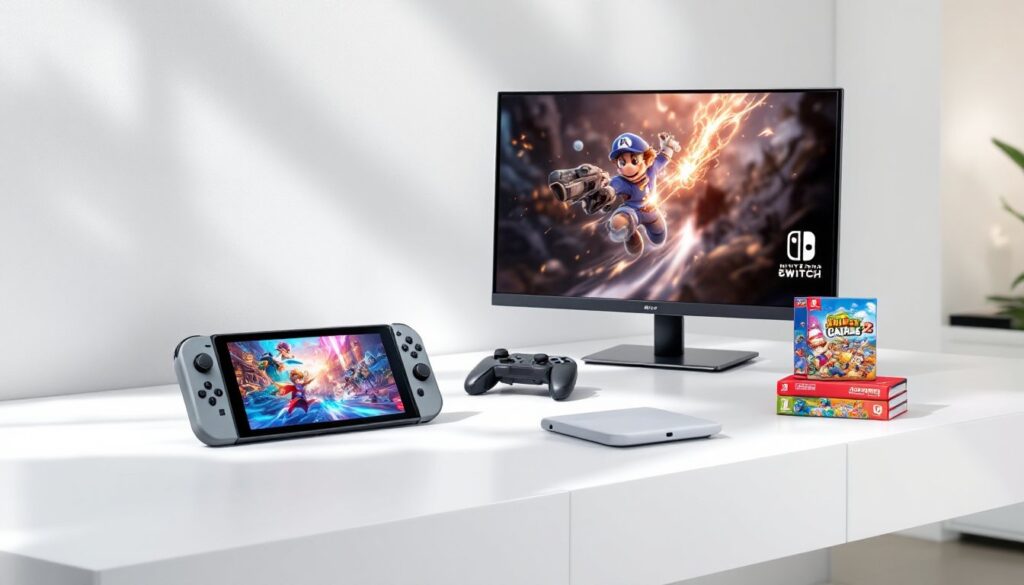
The Nintendo Switch 2 is Nintendo’s successor to the wildly successful original Switch, maintaining the hybrid form factor that made its predecessor a cultural phenomenon. It functions as a handheld device, tabletop tablet, and docked home console, three gaming modes in one package.
Official timeline: Nintendo revealed the Switch 2 on January 16, 2025, with full specs dropping on April 2, 2025. The console hit store shelves starting June 5, 2025 across major regions including Japan, North America, Europe, Australia, New Zealand, Brazil, and select parts of Latin America. Additional rollouts followed throughout 2025: the Philippines, Singapore, and Thailand launched June 26: Malaysia on July 3: Taiwan on July 10: and the UAE by September 17. Argentina came later in October. China’s launch remains indefinitely delayed.
The hardware ditches the dock-less approach of the original Switch in favor of updated “Joy-Con 2” controllers that attach magnetically to the tablet. More internal storage than the original Switch is a core upgrade, addressing one of the biggest criticisms of the first generation. Nintendo also added new social features including GameChat (voice, screen share, and video chat) and GameShare, which allows limited sharing of game modes with family members.
Key Hardware Upgrades And Specifications
Display And Performance Improvements
Here’s where the Switch 2 flexes on its predecessor. The handheld and tabletop modes hit 1080p resolution (Full HD) at 120 Hz refresh rate, delivering a noticeably sharper and smoother experience when you’re playing portable. HDR support rounds out the visual package for more vibrant colors and deeper contrast.
Docked performance is where the real jump happens: the Switch 2 outputs up to 4K resolution at 60 Hz when connected to an external display. That’s a massive leap from the original Switch’s 1080p docked output. For context, this puts the Switch 2 in line with current-gen home consoles in terms of raw display output, though the actual GPU performance gap is more nuanced.
The larger LCD screen on the Switch 2 itself provides more real estate than the original, making handheld gaming feel less cramped. Gamers upgrading from the standard Switch will notice the improvement immediately, the screen is noticeably bigger and brighter. The Joy-Con 2 controllers feature improved features over their predecessors, though Nintendo kept specific upgrades relatively quiet. The magnetic attachment is instantly satisfying and more secure than the rail system of the original.
Backward Compatibility And Game Library
Backward compatibility was make-or-break for the Switch 2, and Nintendo mostly nailed it. The console plays compatible physical and digital Nintendo Switch games, your existing library isn’t worthless. That said, not every Switch title is fully supported: some games have known compatibility issues, so it’s worth checking before upgrading if you have a large collection.
Nintendo sweetened the deal with “Nintendo Switch 2 Edition” bundles that include the original Switch game plus an upgrade pack to enhance resolution, frame rate, and add GameShare support. Free online updates are rolling out for selected games too, giving owners performance boosts without paying full price again.
The launch library is strong. Mario Kart World is the best-selling Switch 2 game so far with over 14 million copies moved. Major third-party ports include Final Fantasy VII Remake and Rebirth, The Elder Scrolls IV: Oblivion Remastered, and Metal Gear Solid Collection Vol. 2. Valheim made the jump to Switch 2, and Elden Ring is in development for the platform with no confirmed release date yet.
First-party exclusives coming soon include Star Fox (exclusive to Switch 2, launching June 25, 2026), Splatoon Raiders (a single-player spin-off arriving July 23, 2026), and a new Yoshi title. The library is diverse enough to satisfy casual players, hardcore fans, and everyone in between. A comprehensive roundup of launch titles gives you the full picture of day-one software availability.
Price, Bundles, And Availability
Nintendo priced the Switch 2 competitively at launch. In the US, the standard model hit shelves at $449.99. Canada’s launch price was CA$629. European pricing sat at €469 (eurozone with VAT included) and £395.99 (UK with VAT). Australia priced it at A$699 with GST included.
Japan got two SKUs: the international model at ¥69,980 (with tax) and a Japan-only model at ¥49,980, giving local buyers a budget option. Japan’s base price dropped to ¥59,980 effective May 25, 2026, reflecting Nintendo’s confidence in the platform.
Price increases were scheduled for North America and Europe starting September 1, 2026, so if you missed launch, expect slightly higher prices now.
Gamers hunting for Nintendo Switch deals and bundles will find bundle options pairing the hardware with games or accessories. Physical Switch 2 game boxes sport a distinctive red design to differentiate them from original Switch titles. On the eShop, Switch 2 software gets flagged with a red band for easy identification.
Supply-chain issues plagued the Switch 2’s initial months, but availability stabilized by mid-2025. If you want one now, stock is generally available in most major markets.
Why Gamers Should Care And What This Means For Nintendo
The sales numbers speak louder than any marketing pitch: over 3.5 million Switch 2 units sold worldwide in the first four days, making it Nintendo’s fastest-selling console ever. Japan’s Famitsu tracked nearly 948,000 units sold in that first week, demolishing the original Switch’s first-week haul of 329,152. By the end of June 2025, Nintendo had moved over 5.8 million units. That jumped to 6 million by July’s end and topped 17 million worldwide by December 31, 2025.
For context, the original Switch had already become Nintendo’s best-selling console and the second best-selling gaming console ever (behind PlayStation 2) with over 146 million units sold by the time the Switch 2 launched. The sequel’s momentum suggests it’s tracking toward similar or better long-term success.
The expanded social ecosystem, GameChat and GameShare, positions Nintendo to compete more directly with PlayStation and Xbox’s online infrastructure. Voice chat, screen sharing, video calling, and the ability to lend games within a family group address complaints from the original Switch era. The virtual game card feature lets you manage your digital library across two systems and share games within a family group, which matters for households with multiple Switch 2 owners.
From a hardware perspective, the jump to 4K docked output and 1080p/120 Hz handheld gaming keeps Switch 2 relevant as a serious gaming platform, not just a novelty hybrid. Major third-party publishers are investing in ports and new games for the system, signaling long-term confidence. Resources like comprehensive product information and industry data sources provide deeper dives into how the hardware stacks against competitors.
If you’re comparing options, the Nintendo Switch 2 vs OLED matchup is worth studying, the OLED still has merit for pure handheld players, while Switch 2 targets everyone else.
Conclusion
The Nintendo Switch 2 is a legitimate leap forward for hybrid gaming, delivering faster performance, sharper displays, and a more robust online experience than its predecessor. Whether you’re upgrading from the original Switch or jumping in fresh, the hardware delivers on Nintendo’s promise of play anywhere, anytime. The game library is already solid and growing, backward compatibility works well for most titles, and the sales momentum proves gamers wanted this upgrade. If you’re serious about Nintendo gaming in 2026, the Switch 2 isn’t just a nice-to-have, it’s the definitive way to play Nintendo’s next generation of games.