Animal Crossing: New Horizons on Nintendo Switch has cemented itself as one of gaming’s most beloved life-simulation experiences. Whether you’re a casual gamer looking to unwind or someone seeking a cozy escape from competitive gaming, this title delivers a uniquely relaxing yet deeply engaging experience. The game’s real-time mechanics mean your island evolves as seasons change, and the endless customization possibilities keep you invested for hundreds of hours. If you’ve never played Animal Crossing for Switch before, or you’re returning after time away, this guide covers everything you need to know to build your dream island paradise from day one.
Key Takeaways
- Animal Crossing: New Horizons on Nintendo Switch offers a deeply relaxing life-simulation experience with real-time mechanics that evolve as seasons change and provide hundreds of hours of engagement.
- Your initial choices—character customization, island hemisphere, and layout—directly impact gameplay, as hemisphere selection determines which creatures, plants, and villagers appear seasonally.
- Crafting and terraforming are core to building your dream island, with the Island Designer app unlocking full customization options to design themed areas and achieve higher island ratings (1-5 stars).
- Multiplayer features via local wireless or online connection enable item trading, cataloging, and cooperative terraforming with friends, transforming Animal Crossing from a solo into a social experience.
- Seasonal events, museum collection goals, and the turnip market create long-term progression systems that ensure fresh content year-round and respect your playstyle, whether casual or hardcore.
Getting Started: Create Your Character and Settle Your Island
Your Animal Crossing: New Horizons journey begins the moment you turn on your Nintendo Switch. The game opens with a character creator that lets you customize your appearance, facial features, hair, skin tone, and initial outfit are all yours to decide. You’ll also choose your island’s hemisphere (affecting which creatures and plants appear seasonally), layout, and name. This matters more than you might think: your hemisphere determines spawn rates for bugs, fish, and villagers throughout the year.
On day one, you’ll land at your new island with nothing but a tent and the task of establishing yourself. Tom Nook walks you through the essentials: placing your tent, choosing locations for your first two villagers, and learning basic controls via the Nook Phone. You’ll also get a brief tutorial on saving and how the in-game clock syncs with your system’s real-time settings. Your first goal is earning Nook Miles, a currency separate from Bells (the regular currency), by completing tasks and gathering resources. Once you’ve earned enough Nook Miles, you’ll pay off your first “getaway package” loan and receive a proper house, marking your transition from newcomer to islander.
Core Gameplay: Explore, Craft, and Customize Your World
The daily gameplay loop in Animal Crossing: New Horizons is straightforward but endlessly satisfying. Each day, you’ll gather resources, branches from trees, softwood and hardwood from chopping, stone and clay from rocks, iron nuggets from those same rocks with better tools, plus seashells, weeds, and fish. You’ll catch bugs and fish (species vary by season and time of day), dig up fossils, talk to your villagers, visit shops, and knock out Nook Miles+ tasks for extra currency. The game’s real-time clock means you experience all four seasons just like in real life, and certain creatures and items only appear during specific months, so planning ahead is key.
As you progress, you’ll unlock key facilities: the Museum (run by Blathers), Nook’s Cranny (the shop), Able Sisters (clothing store), a campsite, and eventually a town hall. This progression gates your customization options gradually, preventing the game from feeling overwhelming. A broad guide to early progression and unlocking features can help you understand what comes next if you want to plan ahead.
Crafting and DIY Projects
Crafting is at the heart of New Horizons. You’ll collect DIY recipes from Tom Nook, message bottles that wash ashore, villagers, Nook Miles redemption, shop purchases, and seasonal events. Each recipe requires specific materials, maybe five softwood and two clay for a simple wooden table, or rare materials like gold nuggets and star fragments for premium furniture.
You craft at workbenches scattered across your island. The beauty here is that nearly everything you craft contributes to your island’s aesthetics and rating. Crafting furniture isn’t just about function: it’s about building the island you actually want to live on.
Island Customization and Building
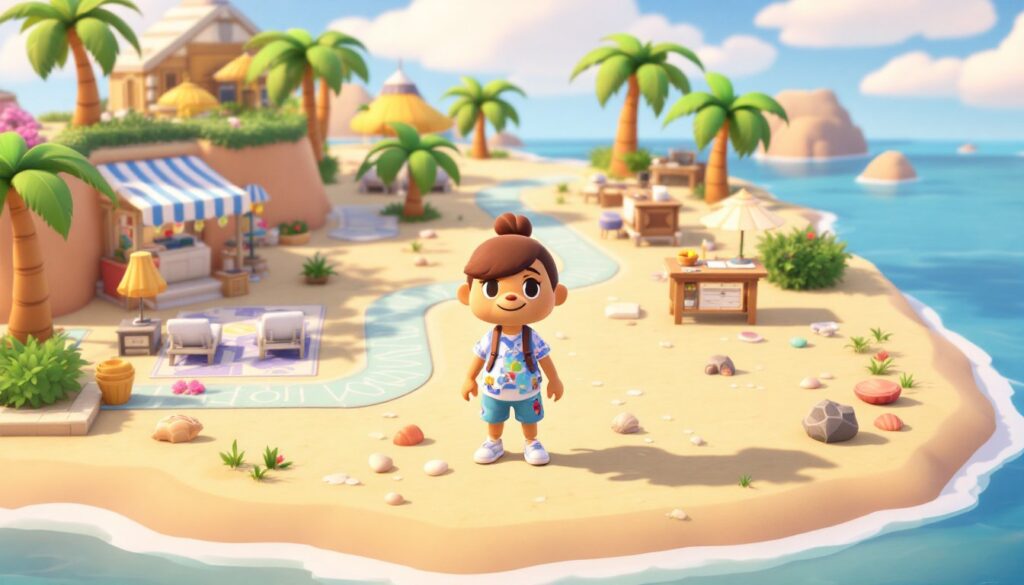
Once you unlock the Island Designer app (available after a few days of play), terraforming becomes available. This is where New Horizons really opens up. You can place pathing, build and remove cliffs, edit rivers, and place virtually any furniture indoors or outdoors. Your island rating, a 1 to 5 star system, depends on how well you’ve decorated and landscaped. Higher ratings unlock rewards like K.K. Slider’s concerts at 3 stars and rare Lily of the Valley flowers at 5 stars.
The customization goes deep. You’re not just placing random furniture: you’re designing themed areas, building neighborhoods, creating beach resorts, or whatever your imagination dreams up. This flexibility is why people keep playing for years.
Community Features: Neighbors, Multiplayer, and Island Visits
Your island can house up to 10 animal villagers, each with unique personalities and dialogue. You can invite them via the campsite, Mystery Island tours, or by scanning amiibo cards. Building relationships with villagers through daily conversations and gift-giving is rewarding, they’ll remember you and reference inside jokes from previous chats.
Multiplayer transforms Animal Crossing from a solo experience into a social one. Via your Nintendo Switch’s local wireless or online connection, you can visit friends’ islands through the airport. This is where item trading, cataloging furniture, and collaborative building happen. The Best Friends feature lets trusted players use tools like axes and shovels on your island, opening up possibilities for cooperative terraforming and decorating sessions.
The Nintendo Switch Animal Crossing Bundle Overview provides context on the hardware side if you’re considering getting the game for the first time. Community engagement, whether trading rare fish with friends or visiting dream islands designed by players worldwide, keeps the experience fresh long after the initial content rush.
Collections, Museums, and Special Activities
Blathers runs the Museum, where you donate fish, bugs, sea creatures, fossils, and artwork. Completing the museum’s collection is a long-term goal for many players, especially since certain creatures only appear during specific months. The satisfaction of donating the final piece and seeing the full exhibit is genuinely rewarding.
Seasonal events punctuate the calendar. Bunny Day in spring, Halloween in fall, Toy Day in winter, each brings limited-time items, DIY recipes, and special activities. These events ensure there’s always something new to work toward, even in months when you’ve exhausted other activities.
The turnip market (hosted by Daisy Mae on Sunday mornings) is a money-making staple. You buy turnips at low prices and sell them during the week at fluctuating prices, gambling on market trends to maximize profit. Meanwhile, Mystery Island tours give you access to special islands with rare spawns, some are designed to farm tarantulas or scorpions for profit, while others offer unique resources or villagers.
Special collections like Gyroids (buried fossils that play music), complete DIY series (matching furniture sets), and cataloging rare items keep hardcore players engaged. Gaming industry coverage and reviews often highlight these long-term goals and how they drive engagement across the playerbase. The game respects your time: progression is gradual and never feels rushed.
Conclusion
Animal Crossing: New Horizons is fundamentally a game about gradual island development, collection, and social play built on a foundation of daily activities, crafting, and endless customization. Whether you’re logging in for 15 minutes to catch one rare fish or spending hours terraforming a new neighborhood, the game meets you where you are. The combination of relaxing gameplay, real-time progression, and seasonal content means you’ll always have something to work toward. Pick up Animal Crossing for Switch, create your character, and start building the island paradise you’ve been imagining.