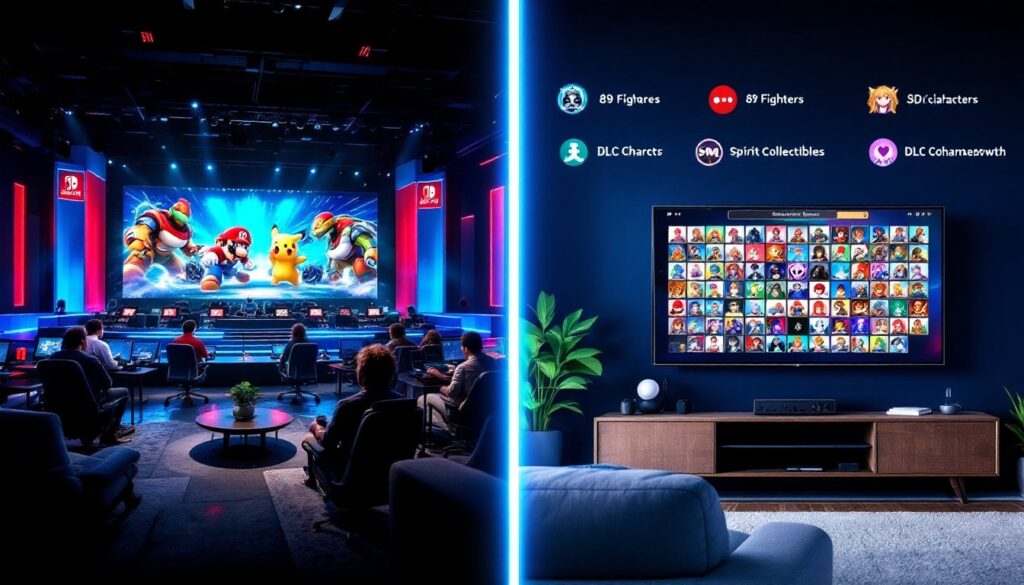
Super Smash Bros. Ultimate stands as the most expansive fighting game ever released, boasting 89 playable characters across its base roster and DLC lineup. Whether you’re a casual player jumping in for the first time or a returning veteran, the game’s depth spans from story-driven single-player campaigns to cutthroat competitive tournaments. With mechanics refined since its 2018 launch and a DLC roster that’s continually evolved, Ultimate remains the definitive Smash experience on Nintendo Switch. This guide breaks down everything you need to know about the character roster, game modes, competitive mechanics, and how to get started in 2026.
Key Takeaways
- Super Smash Bros. Ultimate features 89 playable characters across its base roster and DLC, making it the most expansive fighting game ever released.
- The game offers six distinct modes including Classic Mode, World of Light adventure, and competitive Smash, catering to casual players and tournament competitors alike.
- Efficient character unlocking can be achieved through short Smash matches, Classic Mode runs, or the World of Light campaign, with DLC fighters available for separate purchase.
- Super Smash Bros. Ultimate competitive play emphasizes neutral control, spacing, and rushdown pressure, with recent tournament outcomes favoring adaptable players over reliance on top-tier characters.
- Over 1,000 Spirits provide stat boosts and special abilities for casual play, though they’re banned in official competitive tournaments.
- New and returning players should start with Classic Mode or World of Light to learn movesets, then progress to studying frame data and tournament footage for competitive mastery.
The Complete Fighter Roster: Classic Characters and DLC Additions
Base Game Roster and Legacy Characters
Ultimate launched with 76 fighters (counting Pokémon Trainer’s three separate Pokémon), making it the largest Smash roster at the time. Every single character from previous Smash games returns, all 63 veterans are here. That includes the original eight from Super Smash Bros. N64: Mario, Donkey Kong, Link, Samus, Yoshi, Kirby, Fox, and Pikachu.
Most of these legacy fighters are locked at startup and must be unlocked through play. Classic Mode pairs each character with a themed gauntlet ending in a boss battle, and completing runs unlocks new fighters. Adventure Mode, World of Light, features a massive campaign map where rescuing fighters permanently adds them to your roster. Alternatively, challengers appear after playing standard Smash matches: if you lose a challenger battle, you can retry it later via the “Challenger’s Approach” door in Games & More.
Newcomers like Inkling, Ridley, Simon, King K. Rool, Isabelle, and Incineroar joined the base game, bringing fresh movesets and competitive variety to the meta.
DLC Fighters Pass and Challenger Packs Overview
Since launch, Nintendo released 13 DLC fighters split across two Fighters Passes. These characters don’t unlock naturally, they’re purchased and downloaded via the Nintendo eShop. Each Challenger Pack includes the fighter, a new stage, and a batch of music tracks.
Fighters Pass Vol. 1 added five characters:
- Joker (Persona 5)
- Hero (Dragon Quest)
- Banjo & Kazooie (Banjo-Kazooie)
- Terry (Fatal Fury/King of Fighters)
- Byleth (Fire Emblem: Three Houses)
Fighters Pass Vol. 2 brought six characters:
- Min Min (ARMS)
- Steve (Minecraft)
- Sephiroth (Final Fantasy VII)
- Pyra/Mythra (Xenoblade Chronicles 2)
- Kazuya (Tekken)
- Sora (Kingdom Hearts)
Also, Piranha Plant was available as an early purchase bonus. These DLC additions kept the meta fresh for years and introduced franchise representation that resonated globally. Competitive tournaments adapted stage lists and rulesets as each newcomer arrived, making DLC fighters a significant factor in Ultimate’s longevity.
Game Modes and Core Gameplay Features
Ultimate packs more modes than any previous Smash title, catering to solo players, casual groups, and competitive crews.
Classic Mode is the traditional arcade-style gauntlet. Each fighter has their own themed run, Mario faces platformer enemies, while Sephiroth battles Final Fantasy antagonists. You earn spirits and unlock new characters by winning. Adventure Mode, World of Light is a massive single-player campaign where you navigate a map, rescue corrupted fighters, and gradually restore the world. It’s the deepest story-focused experience the series has offered and doubles as a fun way to unlock the entire roster passively.
Smash is the core mode: pick a fighter, stage, and ruleset, then battle opponents on stock or time limits. Squad Strike lets you use a team of three or five fighters in consecutive battles, lose one, next fighter enters. Smashdown forces variety by removing fighters you’ve used from the pool until the session resets. Both modes work great for local tournaments among friends.
Spirits Mode is a deep collection system. Spirits represent characters and items from across gaming history. Equip them to your fighter to gain stat boosts and special abilities, some Spirits double your attack, others grant invulnerability frames at the match’s start. Over 1,000 Spirits exist, and collecting them ties into nearly every mode. According to competitive communities tracked on Dot Esports, Spirits remain largely irrelevant in tournament play, where competitive rulesets ban them. But, they dominate casual and single-player content.
Stages, Mechanics, and Competitive Play
Ultimate features over 100 stages, with nearly every stage from prior games returning. Stages have three variants: Battlefield (symmetrical platforms), Omega (flat arena, no platforms), and Hazard Toggle (remove stage hazards for neutral play). Competitive rulesets typically settle on a small pool: Final Destination, Battlefield, and a handful of counterpick stages like Pokémon Stadium 2 or Smashville.
Gameplay mechanics differ significantly from Smash for Wii U. Ultimate restored directional air dodging, a Melee staple, allowing players to recover more aggressively and edgeguard more strategically. Landing lag was slashed for most attacks, making combos more fluid. Perfect shielding (parrying) remains timing-based and rewarding: hold shield and press shield at the exact moment before impact to reflect projectiles and stun opponents.
Competitive tournaments run stock format, typically three stocks with a seven to eight-minute time limit. The meta has evolved dramatically since 2018. Early dominance by characters like Snake and Pikachu shifted as players optimized other fighters. Game8 tracks current tier lists reflecting 2026’s competitive landscape, mid-tier and lower-tier characters regularly upset top seeds at major tournaments thanks to player skill and adaptation.
The recent metagame favors rushdown characters with strong pressure tools and safe on-shield options. Projectile spam remains viable but isn’t autocratic. Stages that reward spacing and platform tech skill tend to define tournament outcomes.
Getting Started: Tips for New and Returning Players
Unlock Characters Efficiently
If you want the full roster without grinding, here’s the fastest approach:
- Play short Smash matches (1 stock, low CPU level) to trigger the hidden challenger timer. After each battle, wait roughly 10 minutes or play another match to spawn a challenger.
- Restart your Switch between matches if you’re in a hurry. Closing and reopening the software resets the challenger timer, letting them appear more frequently.
- Use Classic Mode if you want specific characters. Each fighter has a predetermined unlock route, completing their Classic Mode run unlocks that character.
- Adventure, World of Light unlocks fighters by rescuing them on the campaign map. It’s slower than Smash grinding but enjoyable solo content.
- Retry missed challengers via the “Challenger’s Approach” door in Games & More if you lost a challenger battle.
DLC fighters and Mii Fighters bypass normal unlocking. DLC must be purchased and downloaded: Mii Fighters are created via Games & More → Mii Fighter, then customized with movesets.
Learning the Basics
Start in Classic Mode or World of Light to familiarize yourself with your chosen fighter’s moveset. The game includes a detailed controls tutorial, but nothing beats playing. Once comfortable, jump into casual Smash matches against CPUs on progressively harder levels. Learn safe approaches, spacing, and which moves combo into one another.
For competitive ambitions, study frame data (number of frames a move takes). Resources like IGN and community wikis document frame advantage, knockback scaling, and recovery options. Watching tournament footage reveals how pros leverage spacing, ledge trapping, and neutral control.
Remember: Super Smash Bros. Ultimate rewards both labbing (practicing specific scenarios) and raw game sense. New players often win by understanding neutral (positioning before clashes occur) and avoiding overcommitting to attacks.
Conclusion
Super Smash Bros. Ultimate delivers the most complete Smash experience to date, with 89 characters, six distinct game modes, over 100 stages, and refined mechanics that reward both casual fun and competitive mastery. Whether you’re unlocking the roster through World of Light, grinding ranked Smash matches, or studying tournament VODs, the game remains endlessly rewarding. In 2026, the meta continues evolving, and Nintendo’s support ensures new players and veterans alike find their footing in gaming’s most beloved crossover series.