Metroid Prime 4: Beyond is finally here, and it’s been a long time coming. Originally announced back at E3 2017, the game went through a significant development restart before landing in the capable hands of Retro Studios in 2019. Now, with its December 4, 2025 release on Nintendo Switch and Switch 2, fans are getting a proper first-person continuation of one of gaming’s most immersive franchises. This guide covers everything you need to know about Metroid Prime 4, from its development journey to the gameplay innovations that make it worth your time.
Key Takeaways
- Metroid Prime 4: Beyond launched December 4, 2025, on Nintendo Switch and Switch 2, featuring a first-person exploration experience after an 8-year development journey that included a major restart under Retro Studios in 2019.
- The game introduces psychic powers as a core mechanic for combat, puzzle-solving, and traversal, complemented by elemental weapons, a grappling hook, and a motorbike for traversal—modernizing the classic Prime formula while maintaining its beloved structure.
- Metroid Prime 4 uses a hub-and-spoke design centered on Soul Valley, connecting multiple themed zones like jungles and volcanic regions, with a standard playthrough taking around 15 hours and 100% completion requiring significantly more time hunting upgrades.
- Enhanced first-person mechanics include responsive dodge systems, faster visor switching for scanning, and refined movement that feels snappier than the original Prime trilogy, delivering polished gameplay on Switch 2’s advanced hardware.
- The game features multiple endings tied to completion percentage, environmental storytelling through scanning mechanics, and a point-of-no-return at the finale, rewarding thorough exploration with lore about Sylux’s origins and hidden secrets.
- Critical reception praised Metroid Prime 4 as among Nintendo’s most technically impressive titles, balancing familiar Prime structure with meaningful innovations that appeal to both longtime fans and newcomers to the first-person action-adventure franchise.
What Is Metroid Prime 4?
Metroid Prime 4: Beyond is a first-person action-adventure game that continues Nintendo’s celebrated Prime sub-series. Unlike traditional 2D Metroid games, this entry plunges you into Samus Aran’s perspective as she explores alien worlds with a focus on atmospheric exploration, environmental scanning, and combat. You’re dropped on the planet Viewros, a mysterious world where you’ll uncover the history of an ancient race while trying to find your way home.
The game emphasizes the classic Prime formula: semi-linear dungeon-like zones that branch from a central hub area called Soul Valley. It’s not an open-world game in the traditional sense, but rather a structured exploration experience where new abilities gate access to previously inaccessible areas. If you’ve played the original Metroid Prime trilogy or the recent Metroid Prime Remastered on Switch, you’ll recognize the structure immediately, but Beyond pushes the formula forward with new mechanics that fundamentally change how exploration and combat work.
Development Journey And Release Timeline
The road to Metroid Prime 4 has been unconventional. Nintendo first announced the game at E3 2017 with minimal details, just a title and the promise of a first-person Metroid experience. Early development proceeded internally at Nintendo with an external partner studio handling production.
Then, in January 2019, Nintendo dropped a bombshell: the game was being completely restarted in development, and the project was being handed to Retro Studios, the legendary team behind the original Metroid Prime Trilogy. This was a major shift that signaled Nintendo’s commitment to getting the game right, even if it meant starting over. Retro Studios brought years of FPS expertise and a deep understanding of what made the original Prime games special.
The official subtitle and gameplay were revealed in later presentations, finally giving fans a clearer picture of what to expect. After years of waiting, the game launched on December 4, 2025, for both Nintendo Switch and the newly released Nintendo Switch 2. The longer development cycle paid off, reviewers praised the refined gameplay and technical achievements, especially on Switch 2 hardware.
Gameplay Innovations And Features
Metroid Prime 4: Beyond modernizes the series with several key mechanical additions while respecting what made the originals beloved. The most significant new system is the psychic power mechanic, which serves as a game-changing tool for combat, puzzle-solving, and traversal.
The psychic ability set includes telekinetic manipulation of objects, a Control Beam that can be remotely guided for intricate puzzle sections and boss fights, and psychic bombs that you can direct outside of morph ball sequences. These powers aren’t just combat options, they’re deeply integrated into exploration, allowing you to interact with the environment in ways the previous games couldn’t achieve.
Beyond psychic powers, you’ll gain access to elemental weapons that support both offensive and exploratory roles. A grappling hook enables new traversal routes and hidden upgrade hunting. The game also introduces a technologically advanced motorbike used for traversal across open areas and certain combat encounters in large zones. This vehicle adds a new dimension to the classic Metroid loop.
Enhanced First-Person Perspective Mechanics
The first-person perspective has been refined significantly from the original Prime trilogy. Lock-on shooting returns with strafing mechanics, but Samus now has swift forward and backward dodges that feel responsive and critical to combat. When exiting morph ball form, movement is snappier and more fluid, a quality-of-life improvement that matters when you’re juggling multiple combat situations.
Visor access is faster than ever, with a quick “snap” system that lets you switch scanning modes on the fly. First-person exploration emphasizes scanning ruins, statues, and alien structures for environmental storytelling and hints about puzzle solutions. Beyond the corridors, level design opens up into larger outdoor spaces that take full advantage of Switch 2’s horsepower, delivering environments that rival some of the franchise’s most visually impressive moments.
New Weapons And Abilities
The weapon and ability arsenal is robust and varied. Your new psychic toolkit gives you precision control over the environment, essential for solving intricate puzzles and managing boss encounters. The Control Beam, in particular, adds a layer of tactical thinking that older games didn’t require.
Elemental weapons can interact with environmental hazards and locked doors, expanding your strategic options in combat. The grappling hook isn’t just flashy traversal, it’s core to reaching hidden upgrade caches and secret areas. The motorbike functions as both a traversal tool and a weapon platform in certain open-zone encounters, blending exploration with combat in novel ways.
These new systems layer atop familiar mechanics like the morph ball and lock-on shooting, creating a gameplay experience that feels fresh without alienating fans of Metroid Prime Remastered or Metroid Prime Trilogy.
What Fans Can Expect
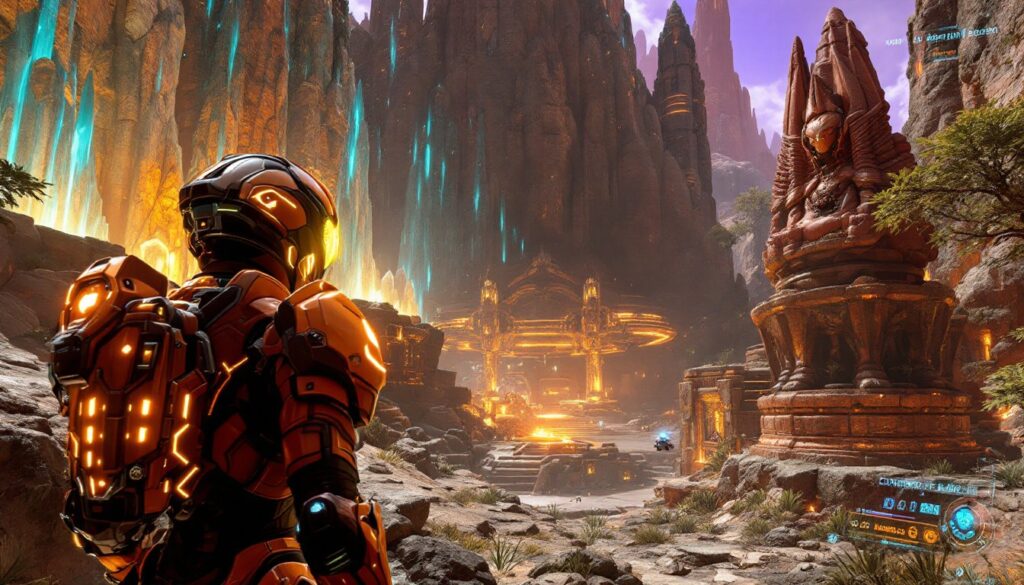
Metroid Prime 4: Beyond delivers on the atmospheric, immersive experience fans loved in the original Metroid Prime. The visuals are stunning, detailed alien environments with advanced lighting and environmental effects. Multiple areas include jungles, industrial complexes, frozen regions, volcanic zones, and mines, all connected through the central Soul Valley hub. Critical outlets have noted this is among Nintendo’s most technically impressive titles, especially when running on Switch 2.
The structure differs from the first Prime game, which featured one massive interconnected world. Beyond uses a hub-and-spoke design with more segmented, dungeon-like areas similar to Metroid Prime 2 and 3. Teleportation keys provide your main fast-travel mechanism between regions. This design choice keeps pacing tight while preserving the exploration-forward gameplay.
Expect a standard playthrough to take around 15 hours, though completion hunters going for 100% will spend considerably longer collecting upgrades and hunting green crystal energy tasks. The game ties additional lore and secret endings to completion percentage, fully clearing the game unlocks content explaining Sylux’s origins and other mysteries.
Difficulty options include standard and harder modes, with hard mode unlocking after completion. Here’s an important heads-up for completionists: the game features a point-of-no-return at the finale. Once you reach the final area, you can’t reload your save before that point, meaning you might want a backup save if you plan on post-game cleanup for missed upgrades. Critical reception from sources like IGN and Game Informer praised the balance between familiar Prime structure and meaningful innovations.
For fans comparing this to Metroid Dread or wanting context on the larger series, it’s worth noting that Beyond operates in first-person rather than the 2D side-scrolling perspective of Dread. If you’re curious about the original formula, Metacritic’s review aggregation has comprehensive scores for both the new game and older entries like Metroid Prime Remastered and Metroid Prime Trilogy, giving you a clear picture of critical reception across the entire Prime sub-series.
Conclusion
Metroid Prime 4: Beyond respects the formula that made the Prime sub-series legendary while pushing it forward with psychic powers, refined first-person movement, and the new traversal bike. The hub-and-spoke progression structure, multiple endings tied to completion percentage, and strong environmental storytelling across Viewros create an experience that feels both familiar and fresh. Whether you’re coming from Metroid Prime Remastered or jumping in fresh, Beyond offers the immersive first-person exploration that defines the Prime legacy.