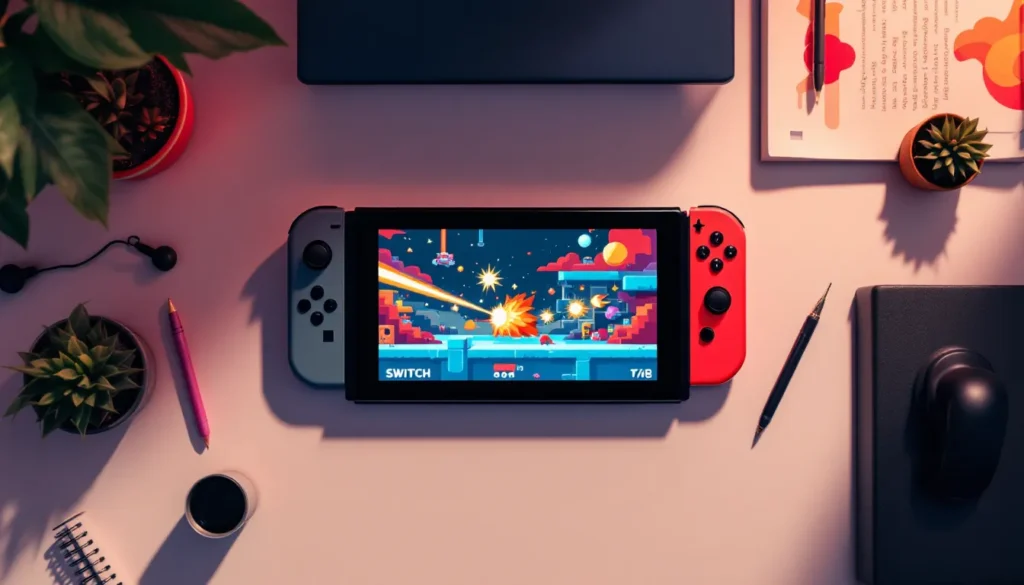
Arcade gaming never really died, it just evolved. For decades, arcade cabinets were the gateway to gaming for millions, and on Nintendo Switch, that legacy lives on in ways that feel both authentic and fresh. Whether you’re chasing high scores on Pac-Man or diving into indie arcade revivals, the Switch has become one of the best platforms to experience arcade gaming in 2026. The console’s portability means you can carry entire arcade halls in your hands, playing handheld or docked, solo or with friends. This guide covers everything you need to know about finding, playing, and mastering arcade games on Nintendo Switch, from the classics that defined the medium to the modern indie gems that are keeping arcade culture alive.
Key Takeaways
- Nintendo Switch arcade games span two categories: licensed emulations of classic 1970s–1990s arcade cabinets and modern indie titles built around arcade principles like high-score chasing and instant restarts.
- Classic arcade titles like Pac-Man, Galaga, and Space Invaders are available through collections like Namco Museum and Arcade Archives, offering flawlessly emulated gameplay that runs perfectly on both handheld and docked modes.
- Modern arcade-inspired games such as Vampire Survivors, Peglin, and Balatro prove the arcade design philosophy remains relevant and engaging for contemporary audiences on the Switch platform.
- Switch’s portability and local multiplayer support make it ideal for arcade gaming—play solo during commutes handheld or dock the system at home for competitive local co-op sessions with friends.
- Arcade games on Switch are budget-friendly: free titles like Tetris 99 exist, individual Arcade Archives releases regularly drop to $3–4 on sale, and bundles offer 10+ games for $15–20 on promotion.
- Online leaderboards sync your high scores globally while Joy-Con controllers provide the responsive inputs arcade games demand, making every platform configuration viable for arcade gaming.
What Are Arcade Games on Nintendo Switch?
Arcade games on Nintendo Switch fall into two broad categories: licensed ports of actual arcade cabinets from the 1970s through 1990s, and modern games designed with arcade principles in mind. The first group includes direct emulations or faithful recreations of machines that once dominated pizza parlors and bowling alleys. The second encompasses indie titles that capture arcade gameplay, fast-paced, skill-based action with clear win conditions and high score chasing.
What makes arcade games distinct is their philosophy: accessible controls, steep difficulty curves, instant-restart gameplay, and the pursuit of a high score rather than a narrative arc. On Switch, these games leverage the hybrid nature of the console. You can grind for high scores while commuting, then dock the system at home to tackle arcade challenges on a bigger screen. Local multiplayer is another key strength, many arcade games support multiple players on a single console, something that feels increasingly rare in modern gaming.
The variety is staggering. Namco’s arcade catalog includes maze games, shooting galleries, and beat-em-ups. Nintendo’s own arcade roots show up in titles like Donkey Kong and Metroid-adjacent platformers. Modern publishers and indies have flooded the eShop with pixel-art shooters, puzzle-action hybrids, and retro-styled roguelikes that tap into arcade DNA.
Best Classic Arcade Titles Available Now
Classic arcade games form the backbone of Switch’s arcade library. These are the titles that influenced game design for generations. The beauty of playing them on Switch is twofold: they run flawlessly on both handheld and docked modes, and they’re often bundled into collections that offer enormous value.
Pac-Man and Namco Classics
Pac-Man is non-negotiable. The 1980 original plays identically to the arcade cabinet, maze design, ghost AI patterns, and all. But Switch owners have options beyond the lone yellow sphere. Namco Museum (available across multiple volumes) bundles dozens of Namco classics: Galaga, Dig Dug, Pole Position, Rally-X, and more. Each game is a historically accurate emulation with minimal input lag, crucial for arcade games where timing is everything.
For those seeking deeper dives, the Namco collections are often on sale during Nintendo eShop promotions. The games range from the absurdly simple (Dig Dug: drill, push rocks, repeat) to deceptively complex (Galaga’s formation attack patterns require pattern recognition). These aren’t just legacy ports: they’re pieces of interactive history that still hold up mechanically.
Donkey Kong Country and Platformers
Donkey Kong Country was Nintendo’s arcade-to-console bridge, and the original arcade Donkey Kong (1981) remains a masterclass in mechanical design. The Switch hosts multiple arcade cabinets through collections, though the Donkey Kong Country series on Switch, particularly Donkey Kong Country: Tropical Freeze, combines arcade sensibilities (tight controls, frame-perfect jumps, constant forward momentum) with modern level design.
The distinction matters: arcade platformers like the original Donkey Kong are short but punishing, with three lives and a game-over screen. Modern “arcade-inspired” platformers extend this concept with meticulously designed levels. Both exist on Switch, and both deserve attention. If you’re hunting pure arcade nostalgia, seek out the original Donkey Kong through various Arcade Archives releases or collections.
Space Invaders and Shooter Classics
Space Invaders (1978) defined the arcade shooter and remains mesmerizing. The slow, methodical descent of alien formations, combined with limited movement and firepower, creates genuine tension in a 20-minute session. Nintendo Switch versions include the original arcade release alongside modern interpretations.
Other essential shooter-era classics include Asteroids, Galaga, and Centipede. These aren’t busy, effect-heavy games, they’re elegant exercises in decision-making under pressure. You manage your position, control your fire rate, and watch patterns. Asteroids, especially, rewards curved-thinking: breaking large asteroids into smaller ones sometimes hurts your score, but it might save your life. That risk-reward interplay is pure arcade design.
Many of these are bundled into multi-game collections from publishers like Taito and Namco. Sales happen regularly, making it affordable to own a substantial arcade library without very costly.
Modern Arcade Games Worth Playing
Modern arcade games prove the genre isn’t museum-bound. Indie developers have rekindled arcade principles with contemporary twists, and the Switch’s eShop is flooded with hits that honor the past while pushing forward.
Indie Arcade Revival Hits
Titles like Tchia, Blasphemous, and Nuclear Throne bring arcade-adjacent design to Switch. But the real torchbearers are games explicitly built around arcade mechanics: high-score chasing, instant restarts, and escalating difficulty.
Vampire Survivors is a recent phenomenon, a roguelike-meets-arcade-shooter that strips combat to its essence. You move around a screen as hordes of enemies approach: you don’t aim, you just position yourself and watch damage numbers fly. It’s simple, addictive, and has the arcade property of “one more run” momentum.
Crypt Splatter and similar pixel-art action games double down on the arcade formula: tight controls, pattern recognition, and leaderboards. These games live or die by moment-to-moment gameplay, not story or progression systems. On Switch, they shine both handheld and docked: the platform’s Joy-Con controllers offer the responsiveness these games demand.
Other modern arcade standouts include Peglin (pachinko roguelike), Balatro (deck-building roguelike), and Dave the Diver (yes, it has arcade-style score-chasing elements). Each respects arcade DNA: clear rules, instant feedback, and replayability.
Licensed Arcade Collections
Publishers continue to package classic and modern arcade games into themed collections. Arcade Archives series from Hamster includes hundreds of games from publishers like Taito, Namco, and SNK, each emulated with frame-perfect accuracy. These individual releases cost $5–8 and often go on sale.
Larger collections like Sega Genesis Classics or Atari Flashback compilations include arcade-style games alongside home console ports. The quality varies, some are feature-rich with save states and scanline filters: others are bare-bones emulations. Reading reviews before purchase helps. Sites like IGN often review these collections, offering detailed breakdowns of emulation quality and included titles.
How to Find and Download Arcade Games on Switch
Finding arcade games on Switch is straightforward but requires knowing where to look. The Nintendo eShop is the primary storefront, but organization can be confusing. Here’s how to navigate effectively.
Nintendo eShop Navigation Tips
The eShop search function is your friend. Type “Arcade Archives” to surface Hamster’s emulation series. Search “Namco Museum” for Namco collections. Use filters: “Arcade,” “Retro,” and “Pixel Art” narrow results to relevant titles.
Browsing by genre helps too. Arcade games often live under “Action,” “Puzzle,” or “Shooter” categories, though this varies. Wishlist feature is essential, add games you’re interested in, and you’ll get notified during sales. Nintendo frequently discounts arcade collections by 30–50%, especially during seasonal promotions.
Following gaming news outlets keeps you informed about arcade releases. Gematsu and Siliconera regularly cover arcade game announcements, including eShop releases and collection bundles.
Local co-op and multiplayer are common in arcade games, so filter for these tags if social gaming matters to you. Many classic arcade games support multiple Joy-Con controllers simultaneously, which is rare for modern titles.
Price-checking tools like Dekudeals track eShop sales across regions, letting you snag deals faster. Arcade games are rarely at launch prices for long: patience usually pays off.
Physical vs. Digital Arcade Game Collections
Most arcade games on Switch are digital-only, but some collections received physical releases. Physical copies offer tangible value: no digital rights licensing concerns, resale potential, and a permanent cartridge. Digital games are tied to your Nintendo account and eShop region: if your account is deleted, access may vanish.
For digital purchases, digital is convenient, instant downloads, no cart switching, and physical space savings. For retro enthusiasts, physical collections feel more authentic and future-proof.
Price-wise, digital arcade games are often cheaper due to lower production costs. A List of Best-Selling Nintendo Switch Video Games includes arcade-influenced titles, and many are available exclusively digitally. Physical releases command premium prices on secondhand markets, which can work for or against you depending on your perspective.
When choosing between physical and digital, consider your library size and organization. Digital archival is easier: physical is more resilient against service discontinuation.
Arcade Game Performance and Controls on Switch
How arcade games perform on Switch depends on the emulation quality and your hardware setup. The good news: most arcade games, being older or indie-scaled, run flawlessly.
Handheld vs. Docked Mode Considerations
Arcade games were designed for fixed-size arcade cabinets, so they adapt to any screen size without compromising visuals. Handheld mode is perfect for arcade games. The compact screen doesn’t reduce readability (arcade graphics are inherently clear), and the portability aligns with arcade’s quick-play nature. You can knock out a few rounds of Galaga during a lunch break.
Docked mode is ideal for longer sessions or local multiplayer. A larger screen makes pattern recognition easier in games like Centipede, where visual clarity matters. Docked also accommodates split Joy-Con layouts for two-player games better than handheld.
Performance: arcade games are lightweight. Even the original Switch runs them at 60 fps without stutter. The OLED model’s brighter screen is better for handheld arcade play, but the difference isn’t night-and-day. Arcade games don’t tax hardware: they tax your reflexes.
One caveat: some modern arcade-inspired roguelikes (like Vampire Survivors) have heavier graphics. These run well docked but may see frame drops handheld on the original Switch. The Switch OLED and Switch Lite perform better here.
Joy-Con and Pro Controller Compatibility
Arcade games are surprisingly flexible with controller options. Most support Joy-Con (single or paired) and the Pro Controller. Some support the Switch Lite’s built-in controller without issues.
For authentic arcade feel, arcade stick controllers exist but are limited on Switch. Options like the Hori RAC-J FS Fighting Stick Mini work with compatible games but don’t work universally. Most arcade games are designed for standard controllers anyway.
Key consideration: arcade games demand responsive inputs. Both Joy-Con and Pro Controller offer this, but Joy-Con have better accessibility (immediate availability, no extra purchase). The Pro Controller’s grip is better for extended handheld-mode play, though this rarely matters for arcade games.
Button mapping is crucial. Some arcade games use unconventional layouts (games designed for 2-button or 4-button arcade cabinets). Most eShop arcade games allow remapping, so you can configure buttons to your preference. Test this before a marathon session.
The Can You Stream on Nintendo Switch guide covers streaming arcade gameplay, which matters if you’re broadcasting high-score runs or multiplayer sessions to an audience.
Multiplayer and Social Features
Arcade games thrive on competition, and Nintendo Switch’s multiplayer features unlock their full potential.
Local Co-Op and Competitive Options
Local multiplayer is an arcade staple. Classic games like Pac-Man, Galaga, and Space Invaders supported multiple players, and Switch versions preserve this. Many games support alternating turns or simultaneous two-player action.
Local co-op on Switch is straightforward: split a pair of Joy-Con, and you’re ready. No additional purchases, no online connectivity needed. This is a massive advantage over mobile or PC arcade emulation, where local play often requires extra equipment.
Competitive local play is where arcade games shine. Leaderboards (both local and online) track high scores, creating organic rivalry. Even single-player arcade games become social events when you’re trading turns trying to beat the high score.
Some modern arcade-inspired games, like Mario Kart 8 Deluxe (arcade kart racing), support up to four local players. Others, like roguelikes, are often single-player but benefit from shared sessions where friends watch and offer commentary.
Online Leaderboards and Achievements
Many Switch arcade games sync high scores online. Arcade Archives releases auto-upload your best scores to global leaderboards, letting you compare against players worldwide. This taps into arcade’s original appeal: seeing your initials on the high-score table (now digital).
Achievements add another layer. Nintendo’s achievement system (distinct from Xbox-style achievements) tracks milestones in games. Scoring certain points, completing levels, or playing for cumulative hours unlocks badges. These feel less crucial than leaderboards for arcade games, but they offer completionism for those who care.
The social element is important. Sharing high-score screenshots or challenging friends to beat your score is built into Switch’s OS. You can post clips and screenshots to social media or share them via the Nintendo Switch Online service.
Online multiplayer is rarer in arcade games. Most classic arcade games were designed for local play, and net code for turn-based or simultaneous gameplay isn’t trivial. Some modern arcade-inspired roguelikes support online co-op, but it’s not guaranteed. Always check the game’s description before assuming online multiplayer exists.
Budget-Friendly Arcade Gaming on Switch
Arcade gaming on Switch can be incredibly affordable, especially if you’re strategic about purchases.
Free and Freemium Arcade Titles
Free-to-play arcade games exist on the eShop, though quality varies. Pac-Man 99 was a free-to-play take on Pac-Man with battle royale mechanics: it’s since been delisted, but similar arcade experiments surface regularly. Free games like Tetris 99 are excellent value and often include arcade-style gameplay.
Freemium models (free to download, optional in-game purchases) are common for modern arcade-inspired games. Be cautious: some balance pay-to-win mechanics awkwardly. Others use cosmetics or convenience features without affecting competitive balance. Reading reviews helps identify fair freemium games.
Free trials and game passes sometimes include arcade games. Nintendo Switch Online subscribers get access to NES and SNES games, many of which are arcade-adjacent (especially NES arcade games like Donkey Kong). This subscription offers enormous value if you’re hunting retro content.
Sales and Subscription Services
Arcade games go on sale frequently. Individual Arcade Archives releases (Hamster’s emulated games) regularly drop to $3–4 from their $8 list price. Bundled collections offer better per-game value. Namco Museum volumes, for instance, bundle 10+ games for $15–20 on sale.
Seasonal sales (Nintendo eShop’s “eShop Super Sales,” Black Friday, seasonal promotions) can net 40–70% discounts on arcade collections. Setting wishlists and following eShop news ensures you catch these deals.
Nintendo Switch Online (the subscription service) provides access to NES and SNES arcade-influenced games as noted. The cost ($20/year for the standard tier) is negligible if you play frequently.
Alternatively, the Discover the Best QVC covers third-party deals and bundles that often include arcade titles. These can offer better value than the eShop, especially during major retail events.
A strategic approach: start with free games and cheap individual Arcade Archives releases (under $5 on sale), then expand to bundled collections as your library grows. High-quality arcade games don’t require expensive hardware or premium subscriptions, just patience and deal awareness.
Conclusion
Nintendo Switch has become one of the best platforms for arcade gaming in 2026, blending portability, affordability, and sheer variety. Whether you’re rediscovering Pac-Man and Space Invaders or diving into indie arcade revivals, the library is extensive and constantly growing.
The strengths are clear: classic arcade games run flawlessly through high-quality emulations, modern arcade-inspired titles prove the genre’s design principles remain relevant, and local multiplayer accessibility makes arcade games social in ways that feel increasingly rare. The Switch’s hybrid nature means you’re never locked into one play style: you can hunt high scores during a commute, then dock the system for a local multiplayer tournament at home.
Starting your arcade journey is simple and affordable. Begin with free or cheap Arcade Archives releases, explore free-to-play options, and gradually build a collection aligned with your preferences. Sales happen regularly, so patience pays off. For deeper exploration, resources like Discovering Rare Nintendo Switch Games highlight lesser-known arcade gems that might otherwise escape your notice.
Arcade gaming isn’t nostalgia, it’s a design philosophy proven timeless. The fact that games from 1978 remain fun to play on hardware from 2017 (or the 2026 updates) says everything. The Nintendo Switch delivers that philosophy in the most accessible package possible.