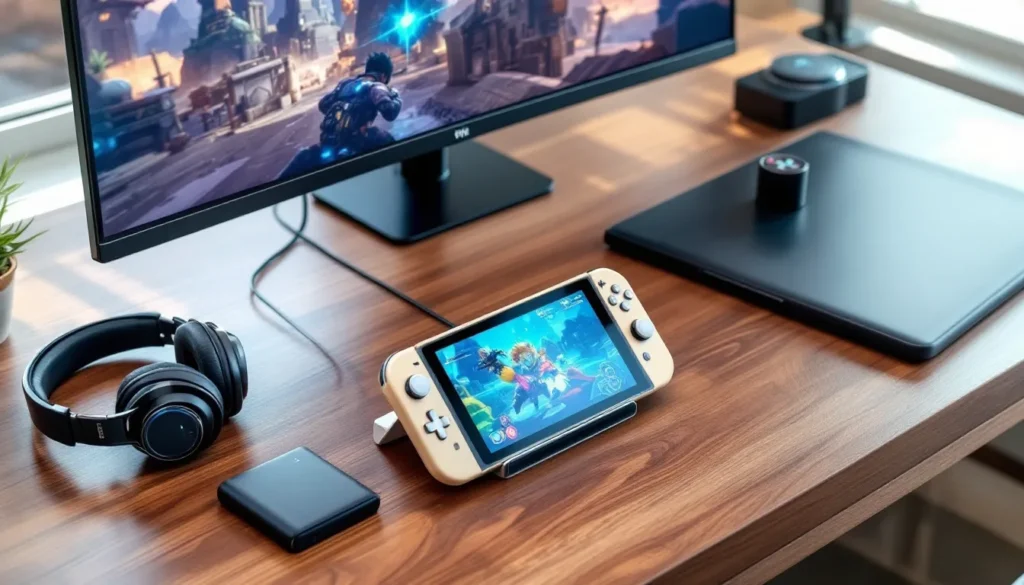
The Nintendo Switch Lite has cemented itself as the go-to portable gaming device for millions of players worldwide. Its compact form factor, solid game library, and affordability make it a no-brainer for casual gamers and dedicated handheld enthusiasts alike. But here’s the thing: out of the box, the Switch Lite is only half the experience. The right Nintendo Switch Lite accessories transform your setup from functional to genuinely great, whether you’re grinding through Pokémon Legends, speedrunning indie gems, or just casually playing during your commute. This guide walks you through the essential, comfort-focused, and storage-oriented accessories worth your money in 2026, so you can focus on what actually matters: the games.
Key Takeaways
- Nintendo Switch Lite accessories are essential investments that extend device lifespan, improve gaming comfort, and protect against daily wear, drops, and damage.
- A quality protective case with integrated grip, tempered glass screen protector, and reliable charger form the core trio of must-have Nintendo Switch Lite accessories for any player.
- Wireless Bluetooth headsets, portable power banks (10,000+ mAh with USB-C output), and ergonomic grips eliminate the most common pain points of extended handheld gaming.
- Official Nintendo Joy-Con controllers guarantee universal game compatibility, while third-party alternatives like 8BitDo and Hori offer better ergonomics at lower costs but require compatibility verification.
- Strategic spending on protective and ergonomic accessories (start with $100–150) provides better value than buying budget knockoffs or premium branded items for non-essential features.
- Prioritize compatibility with the Switch Lite specifically, read recent 2025–2026 reviews from authorized retailers, and verify warranty coverage to avoid counterfeit products and poor-quality accessories.
Why Nintendo Switch Lite Accessories Matter
Your Switch Lite is a portable gaming machine, which means it’s exposed to daily wear, drops, dust, and the occasional liquid spill. Without proper protection, that pristine screen and intact D-pad won’t stay that way for long. Beyond durability, the default experience lacks ergonomic refinement. Extended handheld play without a grip accessory leads to hand fatigue, especially during longer sessions. Your battery drains faster than you’d like on longer trips, and charging options on the go are limited.
Quality accessories aren’t luxuries, they’re practical investments that extend your device’s lifespan, improve your gaming comfort, and enhance the overall experience. A good case saves your Switch Lite from catastrophic damage. A proper charger means you’re never stranded mid-game. A comfortable grip means your hands don’t cramp during a 20-hour Zelda marathon. The cumulative effect of thoughtfully chosen accessories is the difference between owning a Switch Lite and actually enjoying it day after day.
More importantly, the accessory market in 2026 is mature and competitive. You’ve got options across every price point, from budget-friendly knockoffs to premium gear that genuinely justifies its cost. Knowing what to prioritize, and what to skip, keeps your spending focused on items that actually improve your gaming life.
Essential Protective Gear for Your Switch Lite
Cases and Carrying Solutions
Your Switch Lite needs a case. That’s not negotiable. The device is small and portable, which also means it’s easy to drop. A quality protective case absorbs impact, prevents scratches, and keeps your device safe whether you’re tossing it in a backpack or carrying it in your bag.
When shopping for cases, you’ll encounter a few categories. Hard shell cases offer maximum protection, they’re rigid, impact-resistant, and ideal if you’re prone to dropping things or frequently traveling. Soft cases prioritize portability and comfort: they’re lighter, take up less space, and work great for casual players who don’t anticipate major impacts. Hybrid cases split the difference, offering hard-shell protection on critical areas with softer padding elsewhere.
The best cases accommodate the Switch Lite’s specific dimensions (5.1 x 2.6 x 0.55 inches) without bulky overhang. Look for cases with interior padding, secure closures (magnetic or snap buttons), and preferably storage for a few game cards. Some premium options include built-in stands or extra pockets for cables and controllers. Licensed cases from Nintendo or trusted third-party manufacturers like Hori tend to fit better than generic knockoffs, but they’ll cost more.
For portability, consider a smaller carrying pouch if you already have a backpack or bag. These slip easily into existing luggage and provide basic scratch protection without the bulk of a full case. Carrying solutions range from $15 budget options to $60+ for premium leather or rugged cases.
Screen Protectors and Tempered Glass
Your Switch Lite’s 5.5-inch LCD screen is durable but not indestructible. A screen protector is cheap insurance against scratches, minor cracks, and fingerprints that accumulate over time.
You’ve got two main options: standard plastic film protectors and tempered glass. Plastic film is affordable ($5-15), easy to apply, and provides basic scratch resistance. The downside: they reduce screen clarity slightly, attract fingerprints, and eventually wear out.
Tempered glass is the superior choice in 2026. Modern tempered glass protectors for the Switch Lite are thin, crystal clear, and don’t noticeably impact touch sensitivity or screen response. They’re more scratch-resistant than plastic, easier to clean, and more durable long-term. The trade-off is cost, quality tempered glass runs $15-30. Brands like Orzly, Spigen, and Nintendo’s own offerings consistently rank highly on PCMag’s technology reviews for gaming accessories.
When applying either type, follow the instructions carefully. Dust, bubbles, and improper application are the primary causes of protector failure. Some brands include cleaning kits and application tools to make the process easier. If you mess up the first application, you’ve wasted money, so consider purchasing two in case the first doesn’t go smoothly. For the investment, a good screen protector pays for itself the first time it prevents a costly crack.
Controllers and Input Devices
Official Nintendo Joy-Con Controllers
Your Switch Lite comes with a pair of Joy-Con controllers, but there are good reasons to buy additional pairs. Extra controllers enable multiplayer gaming, give you backups if one drifts (a known issue), and let you use different control schemes for different games.
Official Nintendo Joy-Con controllers cost around $70-80 per pair and maintain consistent quality and reliability. They work flawlessly with every Switch Lite game, support HD rumble and motion controls, and maintain their value reasonably well if you ever resell them. Nintendo has acknowledged the stick drift issue and improved newer manufacturing batches, though no batch is immune entirely.
Color options abound in 2026. Beyond the standard black, white, red, and blue, you’ll find themed controllers matching popular franchises, Zelda colors, Splatoon designs, and Pokémon aesthetics. If you value visual consistency with your games, these official options let you customize your setup. Keep in mind: you’re paying a premium for the Nintendo branding, but you’re also getting a guarantee that your controllers will work with every game without compatibility issues.
The downside to official Joy-Con: they’re not the most comfortable for extended handheld play on the Switch Lite itself. The controllers are designed for the full Switch docked mode or hybrid use. For handheld play on the Lite, you might want to explore alternatives.
Third-Party Pro Controllers and Alternatives
Third-party controllers have improved dramatically. In 2026, budget and mid-tier options offer solid value if you understand what you’re sacrificing versus official controllers.
Wired USB-C Controllers: These plug directly into your Switch Lite and are ideal for stationary play at home. Brands like PowerA make reliable wired controllers starting around $25-35. Benefits include no battery management, consistent performance, and lower cost. Downsides: the cable restricts movement and feels tethered. Only use these if you’re playing at a desk or while sitting on a couch near an outlet.
Wireless Third-Party Controllers: Brands like 8BitDo, Hori, and SCUF make wireless controllers that connect via Bluetooth. These run $40-80 and offer features like programmable buttons, custom stick sensitivity, and ergonomic designs tailored for handheld comfort. The catch: compatibility isn’t universal. Some games don’t fully support third-party controllers or may have input lag. Always check game-specific compatibility before buying. On Nintendo Life, you’ll find detailed reviews of third-party controller performance across popular titles.
Battle Pad and Fight Stick Options: If you’re into fighting games, arcade-style controllers are available. These rarely work on the Switch Lite itself (too large), but they’re essential if you plan to dock your Lite and play on an external display.
The golden rule: official Joy-Con controllers guarantee compatibility with every game. Third-party options cost less but come with compatibility risks. For competitive play or games with tight input requirements (platformers, fighting games), stick with official or battle-tested third-party controllers like Hori Split Pad Pro.
Charging and Power Solutions
Dock Alternatives and Charging Stands
The Switch Lite doesn’t come with a dock, which is fine for pure handheld play but inconvenient if you want to charge while maintaining visibility. A charging stand or dock alternative solves this problem.
Basic charging stands are simple: a weighted base that holds your Switch Lite upright while USB-C charging. Brands like AmazonBasics and Spigen make reliable stands for $10-20. They fold flat for travel and work anywhere you can plug in a USB cable.
Dock alternatives go further. Some include built-in USB-C connectivity, HDMI output (though the Switch Lite doesn’t natively support TV docking), and cooling fans. Premium docks from brands like Volaclips or Hori ($30-50) add ventilation to prevent overheating during long charging sessions and provide better build quality.
The critical consideration: make sure any third-party dock uses a standard USB-C connection and doesn’t exceed the Switch Lite’s power requirements. Cheap knockoff docks occasionally cause charging issues or damage. Stick with established brands and read reviews before buying.
For travel, a simple foldable stand is sufficient. For home use where you’ll be charging frequently, a more robust dock with ventilation and cable management pays dividends.
Portable Power Banks and Batteries
Here’s the reality: the Switch Lite’s 5,000 mAh battery lasts 5.5 to 6.5 hours depending on game intensity and screen brightness. That’s solid for everyday use but doesn’t cut it for cross-country flights or day-long gaming marathons.
A portable power bank extends your playtime significantly. When shopping for Switch Lite power banks, prioritize these specs:
Capacity: Look for 10,000 mAh minimum. This roughly doubles your battery life. 20,000 mAh or higher gives you multiple full charges. Anything under 10,000 mAh won’t meaningfully extend your session.
USB-C Output: The Switch Lite charges exclusively via USB-C. Your power bank needs USB-C output (not just USB-A input). This eliminates unnecessary cables and connection points.
Passthrough Charging: This lets you charge the power bank while simultaneously charging your Switch Lite. It’s convenient for stationary setups.
Compact Form Factor: If you’re carrying it alongside your Switch Lite, you want something that doesn’t add significant weight or bulk. Brands like Anker and Spigen make compact 10,000-20,000 mAh banks that fit easily in a backpack.
Budget power banks run $20-35 for reliable 10,000 mAh options. Premium banks with faster charging or higher capacity hit $50-80. Do yourself a favor: read recent reviews on TechRadar’s gaming hardware guides before committing. A cheap power bank that charges slowly or drops connection is worse than having no backup power.
As an added tip: external power banks generate heat, which can cause thermal throttling on the Switch Lite. Avoid charging while playing demanding games during hot weather, let your device cool down first.
Audio and Connectivity Accessories
Wireless Headsets and Speakers
The Switch Lite’s built-in speakers are adequate for casual play but tinny for immersive experiences. A solid audio solution dramatically improves games like Zelda: Tears of the Kingdom or Metroid Prime, where sound design matters.
Wireless Bluetooth headsets and earbuds are the go-to option for handheld play. The Switch Lite supports Bluetooth audio natively (as of a 2021 update), so pairing is straightforward. Look for headsets with solid battery life (6+ hours), comfortable fit for extended wear, and low latency. Gaming-focused headsets from brands like SteelSeries, HyperX, and Turtle Beach offer sub-40ms latency, which minimizes audio lag during gameplay.
The trade-off with Bluetooth: you sacrifice wired audio quality and introduce latency. For story-driven single-player games, this is negligible. For competitive multiplayer, even minor latency can be annoying. If latency bothers you during play, wired options (via USB-C adapter) still exist but feel outdated in 2026.
Budget Bluetooth earbuds ($30-60) work fine for casual gaming. Mid-tier gaming headsets ($80-150) offer better sound and lower latency. Premium options ($150+) add features like active noise cancellation and extended battery.
If you’re not playing solo, portable Bluetooth speakers are fantastic for shared gaming sessions. They’re bulkier than headsets but let everyone hear the action. Battery-powered outdoor speakers from Anker, JBL, or UE Boom work great if you game in parks or on trips.
One critical note: connect Bluetooth audio before launching your game. Switching audio outputs mid-game on the Switch Lite sometimes causes stuttering.
Adapters and Connection Enhancers
If you plan to dock your Switch Lite to an external display, the device supports HDMI output with an adapter, you’ll need a few extras. The Switch Lite doesn’t include dock-to-TV connectivity, so a USB-C hub with HDMI output becomes essential. These range from $30 budget options to $80+ for premium multiport hubs.
USB-C hubs solve another pain point: simultaneous charging and connectivity. A good hub lets you plug in USB devices, connect to HDMI, and charge all at once. Look for hubs with high power delivery (60W+) to ensure your Switch Lite charges while actively gaming.
For online multiplayer, the Switch Lite uses Wi-Fi exclusively, no ethernet port. If your connection is unstable, a USB-C adapter with ethernet connectivity exists but adds clutter. Most players stick with optimized Wi-Fi. If you need rock-solid connection for competitive play, consider upgrading your home router instead.
Gaming headset adapters allow 3.5mm audio jack compatibility via USB-C. These are niche purchases but valuable if you own older gaming headsets you want to repurpose. You can find dependable adapters for $15-25.
Gaming Comfort and Ergonomic Accessories
Grips and Hand Support Solutions
Extended handheld gaming on the Switch Lite without a grip is a recipe for hand fatigue and cramping. Your hands rest in an awkward pinched position that, over hours of play, causes genuine discomfort. A grip solves this.
Grips come in two flavors: cases with integrated grips and standalone grip attachments.
Integrated Grip Cases: These are protective cases designed with ergonomic grip material on the sides and back. Brands like Nyxi, Hori, and Satisfye make cases specifically shaped for the Switch Lite’s dimensions and weight distribution. These run $25-45 and combine protection with comfort. The best options feature rubberized grips, textured surfaces that won’t slip, and contoured shapes that fit naturally in your hands. If you’re buying a case anyway, an integrated grip case is the obvious choice.
Standalone Grip Attachments: Simpler grips clip onto your Switch Lite without a full case. These are cheaper ($10-20) and add minimal bulk. The downside: they don’t protect your device. If protection isn’t your main concern and you already have a case, a standalone grip adds extra ergonomic support without doubling the bulk.
When evaluating grips, consider your hand size. People with larger hands need grips with substantial width and depth. Smaller hands might find bulky grips uncomfortable. Read user reviews mentioning hand size, they’ll indicate whether a grip suits your proportions.
The best grips feel natural after 5-10 minutes of use. Your hands should rest in a neutral position without your wrists bent at awkward angles. If a grip makes your hands feel cramped after testing, it’s not worth buying even though good reviews.
Stands and Docking Solutions
Sometimes you want to play handheld but need your hands free, think streaming your gameplay, taking notes while gaming, or just resting your hands mid-session. A stand enables hands-free play.
Basic stands are simple plastic or metal frameworks that hold your Switch Lite at an angle. These cost $10-20 and work for stationary play on desks or tables. Look for stands with adjustable angles and non-slip bases: wobbly stands are useless for gameplay.
Premium stands offer more flexibility. Some include cooling fans (helpful if you’re streaming and your device gets hot), cable management systems, and wider viewing angles. Brands like Satisfye and Lamicall make higher-end stands ($30-50) with aluminum construction and superior stability.
For travel, foldable stands are invaluable. They collapse to pocket size and set up in seconds at airports, trains, or rest stops. These lightweight options ($15-30) won’t win awards for stability, but they’re better than nothing.
One overlooked option: adjustable tablet stands designed for iPad or Android tablets often work perfectly fine with the Switch Lite. These are frequently cheaper ($10-15) and surprisingly durable. Check compatibility reviews before purchasing.
If you’re considering docking to a TV, you’ll want a stand that accommodates both your Switch Lite and a USB-C hub simultaneously. Some stands include integrated hub connectivity, which streamlines your setup. These premium stands run $50-80 but save space and eliminate cable clutter.
Storage and Organization
Game Card Holders and Storage Cases
If you collect physical Nintendo Switch games, organization becomes necessary. Game card holders prevent cartridges from getting lost in your backpack or lost outright. They also make it easy to keep your collection organized at home.
Game card holders typically hold 12-48 cartridges depending on model. Smaller compact cases hold essentials for travel: larger organizers stay at home. Look for cases with individual slots, cartridges can shift and scratch if they’re loose. Hard plastic cases protect cartridges better than soft pouches, though both work.
Price varies widely: compact travel holders run $10-15, while premium home organizers with wooden or leather construction hit $40-60. If you only have 5-10 games, a simple compact holder suffices. Large collectors benefit from the larger organizing cases.
Some players use generic collectibles display cases or small desk organizers if they prefer aesthetic presentation over pure function. The key is preventing your cartridges from rattling around loose.
Accessory Organizers and Travel Kits
If you’re accumulating cables, chargers, power banks, headphones, and grips, an accessory organizer prevents chaos. Travel kits bundle common accessories into one convenient package: organizing cases give you compartmentalization for existing gear.
Purpose-built Switch Lite travel kits ($30-60) typically include a protective case, screen protector, game card holder, and cable management. These are great starter bundles if you’re unsure what accessories you need. The downside: bundled items are sometimes generic and lower quality than buying each piece individually.
If you prefer customization, buy a generic tech organizer or cable pouch ($15-30) and fill it with your chosen accessories. This approach costs more initially but lets you cherry-pick quality gear.
For gamers who travel frequently, a dedicated Switch Lite travel kit makes sense, everything stays packed and ready. Casual players might just throw loose accessories in a backpack compartment.
One practical suggestion: if you’re investing in multiple accessories, spend $20-30 on a decent tech organizer pouch. It keeps everything together, protects against damage, and makes it easy to grab everything for trips. This is one area where generic organizers work perfectly fine: there’s no need to overpay for a Switch Lite-branded version.
How to Choose the Right Accessories for Your Needs
Budget-Friendly vs. Premium Options
Not every accessory needs to be premium, and not every budget option is a mistake. The key is identifying which items justify higher spending.
Prioritize premium spending on: Protection (cases, screen protectors), ergonomics (grips, stands), and charging (official or trusted power banks). These items directly impact your device’s longevity and your gaming comfort. Cutting corners here costs more in repairs or wasted money on uncomfortable gear.
Budget options work fine for: Decorative items (skins, colorful cases), cable organizers, and game card holders. These don’t impact performance or comfort, so spending less is sensible.
Mid-tier is your sweet spot for: Controllers, audio accessories, and docks. Official controllers guarantee compatibility, but you’re paying for the Nintendo branding. Solid third-party options ($40-60) offer genuine value without silly price premiums.
A practical approach: spend $100-150 on core protective and ergonomic accessories (case with grip, screen protector, basic charger, stand). Then add optional items based on your gaming habits. If you play handheld exclusively, skip the dock. If you rarely travel, skip a portable power bank. Every dollar should address an actual need.
Compatibility and Quality Considerations
Before buying any accessory, verify three things: compatibility with the Switch Lite specifically (not the full Switch or Switch OLED), reviews from recent purchases, and warranty coverage.
Compatibility matters. The Switch Lite is smaller and lighter than the standard Switch. Accessories designed for the full Switch often won’t fit properly. Check product pages for “Switch Lite compatible” labels. When in doubt, read reviews mentioning the Lite specifically.
Quality reviews are your friend. Read recent user reviews (from 2025-2026) rather than older reviews. Manufacturers change suppliers and designs: a 2-year-old review doesn’t guarantee current quality. Look for consistent mentions of durability, fit, and functionality.
Warranty and return policies matter. Buy from sellers offering 30-day returns. If an accessory doesn’t meet expectations, you want an easy exit. Brands like Spigen, Anker, and Hori honor warranties: unknown knockoff manufacturers often don’t.
One final rule: avoid obvious knockoffs of branded products. Counterfeit Joy-Con or fake tempered glass screens are cheap but often cause problems ranging from poor fit to safety hazards. Stick with authorized retailers (Amazon, Nintendo Store, GameStop, Best Buy) to avoid counterfeits entirely. During sales events like Black Friday, retailers offer substantial discounts on legitimate accessories, so overpaying for knockoffs makes zero sense.
Conclusion
Your Switch Lite is only as good as your accessory setup. The right protective case saves your device from accidental destruction. Quality grips and stands eliminate hand fatigue and enable comfortable extended play. Reliable charging solutions keep you gaming on longer trips. And storage organization prevents your growing game collection from becoming a chaotic mess.
The good news: you don’t need to buy everything at once. Start with the essentials, a protective case with integrated grip, screen protector, and a basic charger. Use your device for a month or two, identify pain points, then add accessories addressing those specific needs. A gamer who takes good care of their equipment through intentional accessory choices ends up with a device that lasts years, not one that degrades into a scratched, cracked, battery-depleted mess.
In 2026, the accessory market is mature enough that quality options exist at every price point. You can absolutely equip your Switch Lite completely without very costly, but you’re also not saving money by skipping basic protection. Spend smart, buy strategically, and your Switch Lite will deliver gaming experiences worth the investment.