The Nintendo Switch Lite has carved out its own space in the handheld gaming market since its launch, offering a dedicated portable experience that’s cheaper and more compact than the original Nintendo Switch. In 2026, it remains a solid entry point for gamers who prioritize portability and affordability over TV docking capabilities. Whether you’re a casual player looking to jump into the Nintendo Switch games library, a commuter who needs something pocket-friendly, or someone considering the Nintendo Switch 2 ecosystem from a different angle, understanding what the Switch Lite brings to the table is crucial. This guide breaks down exactly how it differs from the original, what you actually get, and whether it’s the right fit for your gaming habits.
Key Takeaways
- The Nintendo Switch Lite is a dedicated handheld device priced at $199 that prioritizes portability and affordability by eliminating TV docking and detachable Joy-Con controllers.
- Switch Lite’s 5.5-inch screen has higher pixel density (267 PPI) than the original Switch, delivering sharper visuals despite being smaller and more compact for travel.
- Most Nintendo Switch games work on the Switch Lite, but motion-control heavy titles like Ring Fit Adventure and Mario Party require purchasing separate Joy-Con controllers to function properly.
- The Switch Lite comes with only a console and AC adapter—no dock, controllers, or kickstand—making it ideal for single-player handheld gaming but costly if you need multiplayer or tabletop features.
- Choose the Switch Lite if you’re an exclusively handheld gamer seeking affordability; skip it if TV play, motion controls, or gaming versatility across multiple modes are priorities for you.
What Makes The Switch Lite Different From The Original
The Switch Lite isn’t just a smaller Nintendo Switch, it’s a fundamentally different device designed for one purpose: handheld gaming. The original Switch flexes across three modes: TV docking, tabletop play with detachable Joy-Con, and handheld mode. The Lite strips away two of those modes entirely.
The most glaring difference is the lack of docking. If TV play matters to you at all, stop here, the Switch Lite won’t support it. Period. The original Switch connects to a dock that outputs video to your television: the Lite has no dock port whatsoever.
Controls are built-in and permanent on the Lite. The original Switch features detachable Joy-Con controllers, giving you flexibility: dock them on either side of the screen, use them separately for motion controls, or attach a grip. The Lite’s controls are fused to the device, you can’t pop them off. This matters less than you’d think for most games, but certain titles rely heavily on motion controls or separated Joy-Con functionality.
Size and weight tell a story of portability. The Lite weighs around 0.61 pounds compared to the original’s 0.88 pounds with Joy-Con attached. It’s noticeably smaller, easier to slip into a bag, gentler on your hands for extended sessions, and genuinely better for travel. The smaller form factor also means no built-in kickstand: the original has one, the Lite doesn’t.
Feature-wise, the original’s Joy-Con pack HD Rumble and an IR camera for advanced haptic feedback and motion tracking. The Lite loses both. For most Nintendo Switch games, this doesn’t matter. For specific titles, Mario Party, Ring Fit, some motion-heavy games, you’d need to buy separate Joy-Con controllers, which defeats the cost advantage.
Price reflects these trade-offs. The Switch Lite sits around $199 USD, while the original Switch hovers near $299. That $100 difference is real money for budget-conscious gamers.
Performance, Display, And Game Library Overview
Brightness And Screen Quality
Both devices pack the same Nvidia Tegra processor, so gameplay performance is essentially identical. You won’t notice frame rate differences or graphical downgrades between the two, the CPU/GPU architecture is the same, and most games run identically in handheld mode on either device.
The display differences are subtle but noticeable. The original Switch has a 6.2-inch 1280×720 LCD panel, while the Lite squeezes the same 1280×720 resolution into a 5.5-inch screen. This means the Lite technically has higher pixel density, about 267 PPI versus the original’s 236 PPI, making text and small details appear slightly sharper. Both use LCD technology with similar maximum brightness levels. In side-by-side testing, brightness differences are marginal: neither device stands out as dramatically brighter than the other.
The 5.5-inch screen is noticeably smaller. If you have vision issues or prefer larger text, this matters. For most players, the Lite’s display remains perfectly readable and arguably sharper at comparable brightness levels.
Game Selection And Compatibility
The Switch Lite can play the vast majority of Nintendo Switch games available today. But, “compatibility” comes with caveats. Games explicitly labeled as supporting Handheld mode work flawlessly. Most AAA titles, The Legend of Zelda: Tears of the Kingdom, Animal Crossing: New Horizons, Splatoon 3, and hundreds of others, support handheld play without issue.
Problems arise with games that demand detachable controllers or TV mode. Titles relying heavily on motion controls, like some Pokémon games, 1-2-Switch, or motion-heavy party games, become awkward or unplayable without purchasing separate Joy-Con controllers. Games with strong TV-only requirements simply don’t work: you can’t dock the Lite or output to a television.
Ring Fit Adventure, for example, requires detachable Joy-Con and a stand, items not included with the Lite. You’d need to buy these separately, adding $100+ to your purchase. Games like Mario Party rely on Joy-Con separation and motion features, making the Lite suboptimal without extra hardware investment.
For standard handheld gaming, RPGs, action-adventures, platformers, Indies, the Lite library is comprehensive and truly unrestricted. The limitation is niche but real: specific genres and party games designed for multiplayer with separate controllers.
Design, Portability, And What Comes In The Box
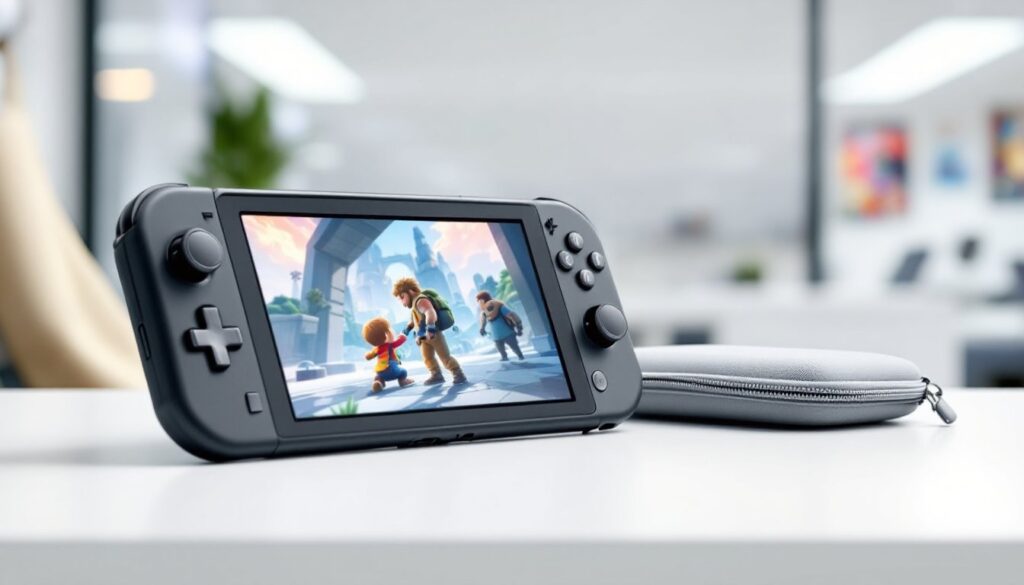
The Switch Lite sports a one-piece plastic body with integrated controls. Unlike the modular original, there’s no breaking it apart, the D-Pad sits on the left side, analog sticks flank the center, and action buttons anchor the right. The design feels purposeful and compact, with smaller bezels than the original, maximizing screen real estate relative to the physical footprint.
Portability is the Lite’s defining characteristic. It fits easily into a backpack, jacket pocket, or small carry case. The weight is negligible, under a pound, making it genuinely travel-friendly. Kids, commuters, and on-the-go gamers gravitate toward the Lite for this exact reason. It’s the gaming equivalent of a paperback versus a hardcover encyclopedia.
What’s actually in the box is important. You get the console and an AC power adapter. That’s it. No dock, no separate Joy-Con controllers, no grip, no HDMI cable, no stand. If you need any of these, you’re buying them separately. The minimal box contents keep the price low but trap you into additional spending if you have specific needs, motion control games, TV play, or comfortable tabletop sessions all require add-ons.
This barebones approach works for casual players who want pure handheld gaming. It becomes frustrating if you realize mid-purchase that you need a kickstand for tabletop play or extra Joy-Con for party games.
Pros And Cons: Is The Switch Lite Right For You
Pros:
- Lower cost: At $199, it’s $100 cheaper than the original Switch, making it an accessible entry point into the Nintendo Switch ecosystem.
- Portability: Lighter and smaller than the original, genuinely pocketable and travel-friendly.
- Sharper display: The 5.5-inch 720p screen has higher pixel density, producing crisper text and visuals at the same resolution.
- D-Pad preference: Some 2D game enthusiasts prefer the integrated D-Pad design over Joy-Con for platformers and retro titles.
- No battery concerns about detached controllers: You’re not managing separate Joy-Con batteries.
Cons:
- No TV output: You cannot dock it or output to a television. Period. This eliminates a major use case for the original Switch.
- Fixed controllers: Motion control and party games requiring separated Joy-Con become problematic without purchasing extra hardware.
- No kickstand by default: Tabletop play requires a third-party stand or separate Joy-Con.
- Slightly smaller battery: Real-world battery life is marginally less than the latest Switch “v2” standard models, though differences are negligible in practical gaming.
- Less versatile: If you want multiplayer gaming with friends via separate controllers, the Lite demands additional investment.
According to recent reviews from gaming news outlets like IGN, the Switch Lite excels for single-player handheld experiences but shows limitations in party gaming and multimedia use. The device genuinely shines if your gaming life revolves around portable titles like Pokémon, indie games, and narrative-driven adventures.
Consider the Switch Lite if you’re exclusively a handheld player, want affordability above all else, or need a secondary console purely for portable gaming. Skip it if TV play, motion controls, or tabletop versatility matter to your gaming diet. The decision hinges entirely on your actual usage patterns, not theoretical specs.
Conclusion
The Nintendo Switch Lite is a dedicated handheld that sacrifices versatility for portability and price. It shares the same processor and core game library as the original Switch, but ditches docking, detachable controllers, and secondary features. For players who genuinely live in handheld mode, commuters, students, casual gamers, it’s an excellent value. For those who want TV flexibility, party gaming, or maximum gaming modes, the original Switch or waiting for the Nintendo Switch 2 makes more sense. Evaluate your actual gaming habits honestly, and the choice becomes obvious.