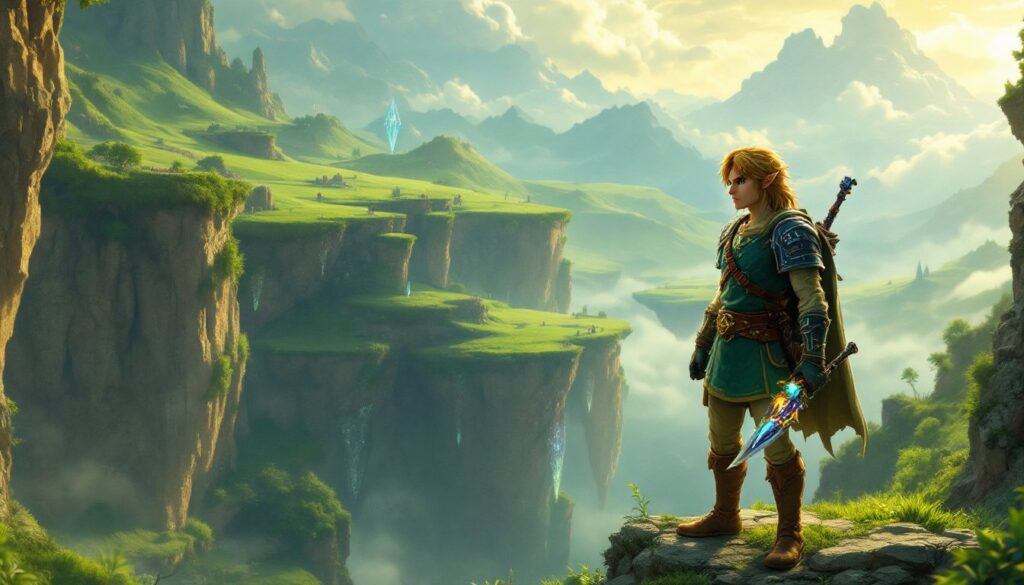
Tears of the Kingdom takes everything that made Breath of the Wild groundbreaking and amplifies it with vertical exploration, creative building systems, and countless ways to approach every puzzle and encounter. Released in May 2023 exclusively on Nintendo Switch, this sequel has become one of the best games on the Switch, captivating both series veterans and newcomers. Whether you’re just starting your journey through Hyrule or looking to master its deeper mechanics, this guide breaks down what you need to know to make the most of Link’s latest adventure.
Key Takeaways
- Tears of the Kingdom features three distinct exploration layers—the overworld, sky islands, and The Depths—that reward vertical freedom and creative problem-solving unlike traditional open-world games.
- Master the four core abilities (Ultrahand, Fuse, Ascend, and Recall) and embrace breakable weapons paired with strategic stamina management to excel in combat and tackle complex puzzles.
- Collect materials liberally and cook them strategically to unlock bonuses like attack boosts and environmental resistances that are essential for surviving tougher encounters.
- The Fuse system and Ultrahand building mechanics transform Tears of the Kingdom into a playground where multiple solutions exist for every challenge, rewarding unconventional thinking over predetermined paths.
- Explore deliberately, prioritize Korok seed collection for inventory space, and look upward constantly to discover hidden areas, treasure chests, and secrets tucked throughout Hyrule’s multi-layered world.
What To Expect In Tears Of The Kingdom
Tears of the Kingdom expands the world with three distinct layers: the overworld of Hyrule, the sky islands floating above, and The Depths below. The scale is staggering, but it’s not just about size, it’s about vertical freedom. You can ascend through ceilings, glide across massive chasms, and descend into underground caverns teeming with secrets.
The story picks up years after Breath of the Wild, centering on Link’s mission to stop Ganondorf’s return while uncovering Zelda’s mysterious past. The narrative threads deeper than its predecessor, rewarding exploration and curiosity. Combat still feels familiar if you’ve played the original, but the new Fuse system transforms how you approach fights and puzzles.
Expect environmental puzzles that actually respect your creativity. There’s rarely one “correct” way to solve an obstacle, you can build, exploit physics, fuse items, or use abilities in unexpected combinations. This systemic design is what makes Tears of the Kingdom one of Nintendo’s most significant modern releases.
Essential Tips For New Players
Start by exploring deliberately rather than rushing to objectives. Early exploration unlocks fast travel points, shrines for stamina and health upgrades, and Korok seeds that expand your inventory. Your survival depends on having space for weapons, shields, bows, and materials.
Always collect materials, mushrooms, plants, gems, minerals, and monster parts are everywhere. Cooking combined ingredients unlocks bonuses (attack up, defense up, cold resistance), essential for tackling tougher enemies and environmental hazards. Don’t hoard materials: use them liberally in cooking and combat.
Use the environment constantly. A steep hill? Solve it by building a cart or using Ultrahand to manipulate objects. A locked door? Sometimes climbing through a window works. Water blocking your path? Freeze it with ice or use a raft. The best games for the Switch reward unconventional thinking, and Tears of the Kingdom is built on that principle. Save your strongest fused weapons, like a sword fused with a diamond or ancient arrow, for boss fights where they matter most.
Mastering Combat And Abilities
Your arsenal includes four core abilities: Ultrahand moves and attaches objects: Fuse combines items with weapons, shields, and arrows for stat boosts or special effects: Ascend pushes you upward through ceilings: and Recall reverses an object’s movement through time.
Combat revolves around breakable weapons and stamina management. Unlike traditional RPGs with durable gear, your weapons will break, plan around it. A wooden club fused with a fire fruit creates a flaming weapon, useful against ice enemies. A claymore fused with a ancient spring becomes a launching hammer. Experimentation is rewarded.
Stamina wheel management separates casual players from skilled ones. Sprinting, climbing, swimming, and gliding all drain stamina. Stamina foods and wheel upgrades from shrines extend your options. Boss fights demand careful stamina usage, know when to attack, when to dodge, and when to defend. Parry windows matter: perfect timing deflects projectiles back at enemies. Master these mechanics, and even the toughest encounters become manageable.
Exploration Strategies And Hidden Secrets
Hyrule’s three layers are packed with content. Caves often hide treasure chests, equipment, and mini-boss encounters. Wells (underground shafts) contain puzzles and valuable items. Sky structures reward players willing to climb and glide. The Depths are darker, filled with unique enemies and materials found nowhere else.
Vertical exploration is the key differentiator in Tears of the Kingdom. Look up constantly, ledges and platforms above ground lead to hidden areas. Ascend through ceilings you spot from below: often there’s a treasure chest waiting above. Gliding off tall structures and diving toward distant objectives teaches you the layout while rewarding exploration.
Korok puzzles are everywhere, flower rings to jump through, rocks to move, patterns to match. Find all 120 Korok seeds to maximize your inventory space. Use a interactive map for Tears of the Kingdom locations if you’re stuck, but discovering secrets organically is part of the experience. The Depths offer a second “campaign’s” worth of content, complete with its own challenges and rewards worth pursuing.
Building And Crafting Systems Explained
Ultrahand is arguably Tears of the Kingdom’s most powerful feature. You can attach wheels to create vehicles, use springs for jumping mechanisms, combine propellers for flying devices, and build bridges from spare materials. The early puzzles teach you basics: later, you’ll construct elaborate contraptions to solve environmental challenges.
Fuse system depth goes beyond combat. Fuse materials to arrows for special effects: fire arrows deal damage-over-time, ancient arrows stun heavy enemies, and bundle arrows fire multiple projectiles. Fuse items to shields, a wooden shield + a wooden wheel becomes a propeller shield, perfect for certain puzzles.
Crafting is exploratory, not mandatory. You’re never forced into a specific build path. Need a flying device? Build it. Prefer a rolling cart? Construct one. Stuck on a water puzzle? Craft a raft. This flexibility is what makes Kirby and the Forgotten Land’s creative approach pale in comparison, Tears of the Kingdom trusts players to solve problems their way, rewarding creativity over predetermined solutions.
Why Tears Of The Kingdom Defines Modern Gaming
Open-world games often promise freedom but funnel players toward specific solutions. Tears of the Kingdom genuinely respects player choice. Reviewers on IGN and across the industry consistently praised this design philosophy. The game doesn’t penalize unconventional approaches: it rewards them.
Vertical exploration transformed open-world design. Breath of the Wild gave you horizontal freedom: Tears of the Kingdom adds vertical depth. Sky islands and The Depths aren’t just padding, they’re fully realized regions with distinct ecosystems, enemies, and puzzles. Climbing a mountain and then ascending through it to reach sky islands feels revolutionary even after 60 hours.
The building and fusion systems proved that action-adventure games can incorporate complex creation mechanics without sacrificing combat or exploration. Most AAA titles choose depth in one area: Tears of the Kingdom delivers excellence across multiple systems. Video Games Chronicle reported this approach influenced industry discussions on systemic game design and player agency for months after release.
Conclusion
Tears of the Kingdom isn’t just a sequel, it’s a masterclass in game design. With exploration spanning three distinct layers, combat demanding both strategy and creativity, and building systems that reward imagination, it stands as one of the greatest Nintendo Switch games ever made. Whether you’re a series veteran or new to Hyrule, the journey awaits.